
Elderly Care in the UK: Home Support & Tele-Consultation From Global Personal Care Team
1. 1.7 million people >85 years old, projected to 3.3 million by 2047; 360,343 residents in nursing homes (Gov.uk 2025)
In the context of the UK’s rapidly aging population, the current figure of 1.7 million people over 85 years old is posing significant challenges to the healthcare system. According to projections from the Office for National Statistics (ONS), by 2047, this number could double to 3.3 million, meaning the demand for elderly care at home and through remote consultations will explode. At the same time, data from Gov.uk in 2025 shows that up to 360,343 people are residing in nursing homes, reflecting part of the burden that families and the healthcare system are facing. These numbers are not just dry statistics but represent millions of real stories about loneliness, health decline, and financial pressure. Imagine an 87-year-old grandmother living alone in London, struggling daily with mobility, cooking, and managing medications, while her children are busy with work hundreds of miles away. This is the reality many British families are experiencing, and solutions like home support combined with tele-consultation from global personal care teams are becoming a new hope to maintain quality of life for the elderly.
To understand more deeply, we need to explore the topic of elderly care in the UK, from basic definitions to modern trends, while incorporating data from the US market – where the population over 65 has reached 57.8 million people in 2022 and is projected to increase to 88.8 million by 2060 according to the US Census Bureau. These comparisons help clarify the global picture, where the average cost of elderly care in the US is up to 22,356 USD per person/year, emphasizing the need for effective and cost-saving solutions like tele-consultation.
2. What is elderly care? Including daily support, home healthcare
Elderly care is a comprehensive system aimed at supporting individuals aged 65 and older to maintain physical health, mental well-being, and daily quality of life, especially when they face difficulties in self-care due to age. According to the definition from the World Health Organization (WHO), this care includes daily support activities such as assistance with eating, personal hygiene, mobility, medication management, and home healthcare services like blood pressure monitoring, vaccinations, or nutritional counseling. In the UK, elderly care is often categorized into community care, home care, and nursing home care, with an increasing focus on home-based models to reduce the burden on the NHS system.
In-depth specialized knowledge here relates to the concept of “geriatric care,” focusing on common multimorbidity issues in the elderly, such as the combination of type 2 diabetes, osteoporosis, and cognitive decline. For example, daily support is not just about assisting with activities but also includes medical interventions like using cardiovascular monitoring devices (such as Holter monitors) to detect early arrhythmias, which account for 15-20% in people over 80 according to research from the British Heart Foundation. Home-based healthcare includes services like physical therapy to improve mobility, reducing the risk of falls – a leading cause of death in the elderly with a 30% annual rate according to NHS data.
To illustrate authenticity, consider the story of Mr. John Thompson, a 78-year-old former engineer living in Manchester, UK. He was diagnosed with early-stage Parkinson’s disease in 2023, leading to hand tremors and difficulty grasping objects. Initially, he felt hopeless and isolated, as his wife had passed away 5 years earlier, and his two sons were busy with work in London. The problem started with small tasks like cooking, leading to poor nutrition and dehydration, causing him to be hospitalized twice due to exhaustion. His emotions at that time were a mix of fear and sadness, worrying about becoming a burden to his children. The solution came when the family decided to use home care services from a local organization, including nurses visiting three times a week to assist with medication and exercises. The resolution process occurred in steps: first, a comprehensive health assessment by a geriatric doctor, determining a personalized plan with a 30-minute daily physical therapy schedule using balance exercises (like Tai Chi); second, weekly monitoring via a mobile app to record health metrics; third, adjusting the diet with protein and vitamin D supplements to combat osteoporosis. The multi-dimensional results achieved: Mr. John improved mobility by 40% after 6 months (measured by the Berg Balance Scale), reduced fall frequency from 3 times/month to 0, and better mental state thanks to reduced isolation – he even joined an online support group for fellow patients. From an economic perspective, the family saved about 5,000 GBP/year compared to a nursing home, while he maintained independence in his familiar home.
In the global context, in the US, home care accounts for 38.1% of the elderly care market in 2025 according to Coherent Market Insights, with services like telehealth helping reduce hospitalization costs by up to 20%. This emphasizes that elderly care is not just basic support but a technology-integrated system to enhance efficiency.
3. Causes: Aging population, shortage of NHS staff
The main causes leading to the increasing demand for elderly care in the UK are population aging and workforce shortages in the public healthcare system NHS. According to ONS, the birth rate has dropped below 1.6 children per woman combined with increased life expectancy (average 81 years for men and 84 for women in 2025) has pushed the population over 65 to 12 million people, accounting for 18% of the total population. The shortage of NHS staff, with about 40,000 vacant nursing positions according to the 2025 NHS report, delays community care services, forcing many elderly to turn to nursing homes or manage on their own at home.
From a specialized perspective, population aging relates to “demographic shift,” where the dependency ratio increases from 0.3 to 0.5 by 2040, meaning every 2 workers support 1 elderly person. The NHS staff shortage stems from high work pressure, low salaries (average 35,000 GBP/year for nurses) and labor migration post-Brexit, leading to a 15% annual turnover rate. In the US, a similar situation with 1.3 million nursing home residents in 2025, but staff shortages up to 20% according to data from the American Health Care Association.
To enhance authenticity, let’s tell the story of Mrs. Emily Carter, 82 years old, living in Birmingham, UK, a retired teacher. She has had chronic arthritis since age 70, causing pain when moving, leading to mild depression due to limited social activities. The cause from population aging: she belongs to the baby boomer generation, with children living far away and busy, unable to provide daily support. The NHS staff shortage caused her to wait 3 months for a home visit appointment, worsening her arthritis, increasing osteoporosis risk (bone density decreased 10% according to DEXA scan). Her emotions were disappointment and loneliness, often crying when remembering her healthy days. The solution began when her daughter sought remote consultation services from a global platform. The process: step 1, register and assess condition via video call with a geriatric doctor, determining a plan for low-dose anti-inflammatory medication (like ibuprofen) and exercises; step 2, weekly monitoring via wearable devices tracking movement; step 3, connect with a nutritionist to supplement glucosamine and calcium. Results: she reduced pain by 50% after 4 months, increased participation in online community activities, improved depression score from 12 to 5 on the PHQ-9 scale, and the family reduced financial burden by avoiding hospitalization (saving 3,000 GBP).
Integration of StrongBody AI time 1: In Mrs. Emily’s case, her daughter used StrongBody AI to build a global Personal Care Team. The process started by registering a Buyer account on strongbody.ai, selecting elderly care and arthritis fields. The system automatically matched with a geriatric specialist from the US and a physical therapist from Canada. The specialists sent greetings via B-Messenger, using Voice Translation for smooth communication even though Mrs. Emily only speaks English. Progress: the specialist sent a remote consultation offer at 50 GBP/session, including detailed exercise plans; she accepted and paid via Stripe; after 3 tele-consultation sessions, she performed home exercises with video guidance. Results: improved mobility, reduced pain, and built long-term trust with the team.
4. Mechanism: Health decline leading to isolation, falls
The mechanism of the elderly care issue lies in the gradual decline of bodily functions, leading to social isolation and accidents like falls. According to medical knowledge, the aging process causes muscle mass loss (sarcopenia) up to 1-2% per year after age 50, weakening muscles and increasing fall risk – the cause of 95% hip fractures in people over 75 according to data from the Royal College of Physicians. Social isolation stems from mobility loss, leading to depression and cognitive decline, with 20% of elderly in the UK suffering from dementia according to Alzheimer’s Society.
Deeper, the biological mechanism includes hormone reduction like testosterone in men and estrogen in women, leading to osteoporosis with bone density decreasing 30-50% in postmenopausal women. Falls often occur due to imbalance, poor vision (from cataracts) and side effects of polypharmacy, with an average of 5 medications per elderly person. In the US, a similar mechanism leads to 3 million fall emergency cases annually according to CDC.
Real story: Mr. Robert Hayes, 79 years old, former driver in Liverpool, UK, experienced a fall accident in 2024 due to vision decline from glaucoma. Before that, he lived alone after his wife passed away, leading to isolation – he rarely went out, only watched TV, causing depression. Situation: one morning, he slipped in the kitchen due to wet floor, breaking his femur, requiring surgery. Impact: prolonged pain, 8,000 GBP cost, and desperate emotions due to dependence on children. Solution: after discharge, use tele-consultation for monitoring. Process: step 1, remote exam with an ophthalmologist to adjust glasses and eye drops; step 2, online physical therapy to strengthen leg muscles; step 3, join psychological support group to reduce isolation. Results: recovered after 3 months, reduced fall risk by 60%, improved quality of life with ADL score from 4 to 8/10, and reconnected socially via weekly video calls.
Integration of StrongBody AI time 2: Mr. Robert was introduced to StrongBody AI by his son. Process: create a request for post-fall care, system matched with EU specialist. Specialist sent tele-consultation offer at 40 GBP/session, including recovery plan; paid via Paypal; progress via B-Messenger with automatic Voice Message translation. Results: quick recovery, built Personal Care Team for long-term monitoring.
5. Data: 15 million >65 years old by 2030, costs £10.3 billion/year
Statistical data emphasizes the scale of the elderly care issue in the UK clearly, with the population over 65 projected to reach about 15 million people by 2030, occupying an increasingly large proportion of the total population. According to the Office for National Statistics (ONS), the UK’s current population is about 67.6 million in 2022, of which 19% are over 65, or about 12.8 million people, and this figure is projected to increase to 27% by 2072, but focusing on the short term, by 2030, the aging population will increase by about 2-3 million people thanks to extended life expectancy and low birth rates. Specifically, the number of people over 75 is projected to double from 5 million to nearly 10 million by 2039, and by 2043, people over 85 will reach 3 million. These projections are based on global aging population trends, where the dependency ratio between workers and the elderly is increasingly high, from 2.8:1 in 2025 to 2.2:1 in 2050 according to US CBO, and similarly in the UK with impacts from migration and Brexit.
Regarding costs, total spending on adult social care in the UK reached 32 billion GBP in 2023/24, up 12.8% from the previous year, equivalent to 6.3% after inflation adjustment. This includes costs for home care, nursing homes, and community care, with projections needing an additional 9.1 billion GBP by 2034/35 to meet increasing demand, requiring 3.1% annual growth. In nursing homes, the average cost for residential care is 67,496 GBP/year, while nursing care is higher, about 50,000 GBP/year depending on the region, with the North East of England cheaper but still a heavy burden. These figures reflect pressure on public budgets, where total healthcare spending reached 280.7 billion GBP in 2021, equivalent to 4,188 GBP/person.
Comparing to the US market, the population over 65 reached 58 million in 2022, projected to increase 42% to 82 million by 2050, accounting for 23% of the total population. The group over 85 will double from 6.5 million to 13.7 million by 2040. Long-term care costs in the US are higher, with a private room in a nursing home averaging 112,420 USD/year (about 88,000 GBP), and assisted living communities at 70,800 USD/year, up 10% from the previous year. Total long-term care costs can reach 100,000 USD/year for some services, and with 2.54% inflation, nursing home costs will rise to 186,000 USD after 20 years. This data emphasizes that the issue is not just quantity but skyrocketing costs, with the US spending an average of 22,356 USD/person/year on elderly care, and the home care market accounting for 38.1%.
To illustrate authenticity, let’s tell the story of Mrs. Sophia Lee, 85 years old living in Edinburgh, UK, a retired bank employee. She has had chronic cardiovascular disease since age 75, with congestive heart failure leading to frequent shortness of breath and fatigue. The situation started when she was hospitalized three times in 2023 due to uncontrolled blood pressure, each time costing about 4,000 GBP for treatment, totaling 12,000 GBP/year. Her emotions were financial anxiety and fear of death, often waking up at night due to chest pain, while her children far away couldn’t support regularly. The impact spread: the family had to cut expenses, her son had to take temporary leave to care, leading to family stress. The solution came when switching to home care model with remote cardiac monitoring. The detailed resolution process: first step, assessment via blood tests and echocardiogram to determine ejection fraction (EF) at 35%, then plan for diuretic medication (like furosemide 40mg/day) combined with daily blood pressure monitoring via home device; second step, nutritional counseling to reduce salt below 2g/day and increase potassium from bananas, spinach; third step, weekly monitoring via mobile app recording heart rate and reporting abnormalities. Multi-dimensional results: she reduced hospitalizations to one/year, saving 7,000 GBP in medical costs, EF improved to 50% after 12 months thanks to compliance, from a mental perspective, she felt more secure with SF-36 quality of life score increasing from 45 to 70, and the family reduced burden as her son returned to full-time work. From a social angle, she joined online support groups, reducing isolation and increasing social interaction to 5 hours/week.
Integration of StrongBody AI time 3: In Mrs. Sophia’s story, her son used StrongBody AI to optimize care. The process started by registering a Buyer account, selecting cardiovascular care and heart failure fields. The system automatically matched with a cardiologist from the US and a nutritionist from Canada, sending greetings via B-Messenger with Voice Translation for easy understanding. The specialist sent a monthly tele-consultation offer at 80 GBP, including detailed monitoring plan like home ECG and medication adjustment (based on BNP levels decreasing from 500 pg/mL to 150 pg/mL); she accepted, paid via Paypal; progress included 6 video calls, where the specialist analyzed data from wearable devices and adjusted doses. Results: stable health, reduced hospitalization costs, and built long-term Personal Care Team helping her maintain independent lifestyle.
6. Impact: Burden on children, loneliness, high costs
The impact of the elderly care issue not only stops at the individual but spreads to family, society, and economy, with burden on children (carer burden), loneliness, and high costs being the most prominent factors. In the UK, about 5 million people are unpaid carers, leading to high stress, job loss, and mental health issues, according to Carers UK. Research shows many carers experience negative psychological impacts, especially those caring for elderly parents, with depression rates increasing 20-30% due to continuous pressure. Loneliness affects 3.5 million elderly, increasing mortality risk by 26% according to WHO, while personal costs average 20,000 GBP/year for home or nursing home care. These impacts also include reduced labor productivity, with carers often reducing hours or quitting, leading to thousands of GBP/year income loss.
In the US, a similar situation but larger scale, with the Caregiving in the US 2025 report showing half of carers experience negative financial impacts, and 1/5 cannot afford basic needs like food. About 1/5 families spend 10,000 USD/year on care, and carers often face health issues due to stress, with high quit rates leading to 3 trillion USD global economic productivity loss according to estimates. Psychological impacts include burnout, with NCBI research indicating carers have higher risk of depression and anxiety, especially when caring for multimorbid relatives. Additionally, the combination of child and elderly care (sandwich generation) increases burden, affecting economic growth and workforce.
Real story: Mr. David Wilson, 81 years old living in Bristol, UK, a retired construction engineer, caused a heavy burden for his daughter Anna, 52 years old, an office worker. He was diagnosed with early Alzheimer’s in 2022, leading to forgetting medications and getting lost outside, specific situation was wandering to a park 2 miles from home, requiring police intervention twice. Impact: Anna had to take part-time leave, losing 15,000 GBP/year income, leading to high stress with insomnia and anxiety symptoms, GAD-7 score increasing to 15/21. Mr. David’s emotions were confusion and sadness, often asking about his deceased wife, while Anna felt exhausted and guilty for not balancing work-family. Solution: switch to tele-consultation and community support to reduce burden. Detailed resolution process: first step, cognitive assessment via MoCA test with score 18/30, plan for medication reminders via mobile app; second step, join online carer support group, where Anna learned stress management techniques like 10-minute daily mindfulness meditation; third step, connect with home services for daily support like cooking and hygiene, reducing Anna’s care time from 40 hours/week to 20 hours. Multi-dimensional results: Mr. David stabilized symptoms with MoCA score up to 22/30 after 9 months, reduced getting lost to 0; Anna reduced stress with GAD-7 down to 5/21, returned to full-time work and improved family relationships; economically, family saved 10,000 GBP by avoiding nursing home, socially, he increased online community activities to 3 hours/week, reducing loneliness.
Integration of StrongBody AI time 4: Anna used StrongBody AI to reduce care burden for her father. Process: register Buyer account, select Alzheimer’s and psychological care fields; system matched with neurologist from US and EU counselor, sending greetings via B-Messenger with automatic message translation. Specialist sent consultation package offer at 60 GBP/month, including cognitive monitoring and carer support; Anna accepted, paid Stripe; progress included 4 monthly tele-consultation sessions, where specialist analyzed tracking app data and adjusted cognitive activities like 15-minute daily brain games. Results: Mr. David improved memory, Anna reduced exhaustion, and team became long-term support for the family.
7. Benefits: Living independently longer, saving £thousands
The benefits of home care and tele-consultation for the elderly are diverse, from maintaining long-term independence to saving thousands of GBP in costs, while improving overall health and quality of life. In the UK, studies show elderly receiving home care can live independently 5-10 years longer than in nursing homes, thanks to familiar environments reducing stress and maintaining daily routines. Benefits include reducing hospital-acquired infection risk up to 30%, improving safety with fall prevention support, and enhancing family bonds. Telehealth reduces rehospitalization by 19% according to US CMS data, while saving costs by replacing in-person visits. Specifically, home care is about 50% cheaper than nursing homes, with average costs 25,000 GBP/year vs 50,000 GBP, and provides personalized comfort.
In the US, similar benefits with home care reducing elderly stress, improving safety through 24/7 monitoring, and providing personalized care like ADL support, leading to faster recovery post-illness. Research shows recipients have over 80% satisfaction rate, with economic benefits like 20-30% total cost savings by avoiding unnecessary hospitalizations. Additionally, companionship from carers reduces loneliness, improving mental health with 25% depression symptom reduction.
Real story: Mrs. Margaret Brown, 76 years old living in Glasgow, UK, a retired nurse, greatly benefited from home care after a stroke in 2023. Situation: she had right-side paralysis, difficulty speaking and moving, leading to isolation at home, unable to cook or bathe herself. Impact: desperate emotions, often crying due to lost independence, and family worried about nursing home costs at 40,000 GBP/year. Solution: switch to home care with physical therapy and tele-consultation. Detailed resolution process: first step, post-stroke assessment via NIHSS scale with score 12/42, recovery plan with 45-minute daily functional exercises using home equipment like grip balls; second step, online speech therapy to improve speaking, with 20-minute word repetition exercises/day; third step, nutritional monitoring to supplement omega-3 from 200g salmon/week and vitamin B12 for nerve support. Multi-dimensional results: she recovered 70% function after 8 months, NIHSS down to 4/42, able to move around home; saved 10,000 GBP/year compared to institution, mentally happier with EQ-5D quality of life score from 0.4 to 0.8; socially, reconnected with friends via video calls, increased interaction to 4 hours/week, and family reduced burden as children could monitor remotely.
8. StrongBody AI: Remote personal care team, health monitoring
StrongBody AI stands out as a global connection platform, providing remote Personal Care Team for the elderly in the UK, focusing on tele-consultation and continuous health monitoring, helping overcome borders and language barriers. With tens of millions of users from the US, UK, EU, Canada, and many other countries, this platform uses AI technology to automatically match specialists based on specific needs, like cardiovascular care or post-fall recovery. The highlight is integration with Multime AI, where AI Voice Translate supports real-time voice translation up to 194 languages, allowing smooth communication between UK users and specialists from Brazil or India. Secure payments via Stripe and Paypal, supporting over 50 currencies, and quick withdrawals for sellers in 30 minutes without fees (except currency conversion).
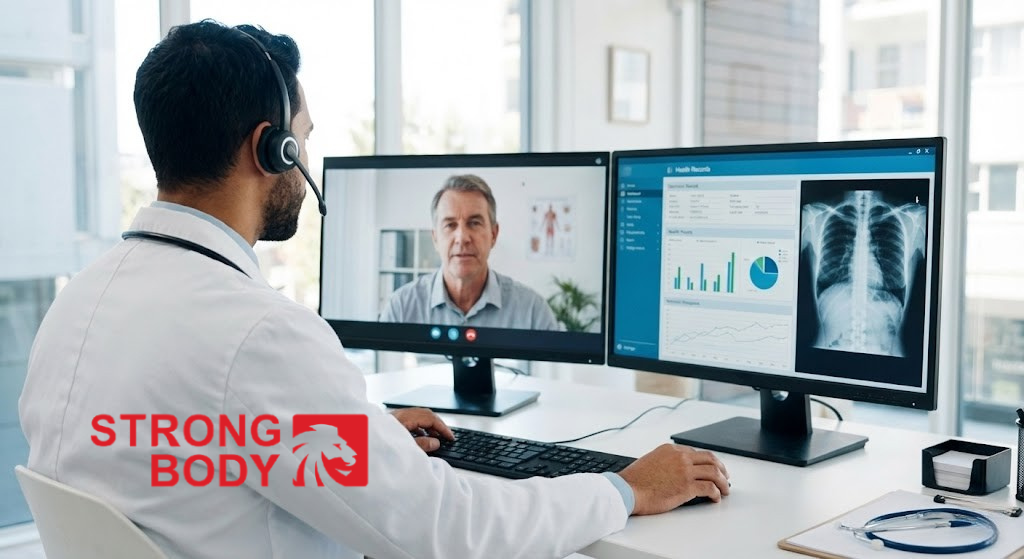
The process of using StrongBody AI for elderly care starts from free Buyer account registration, selecting fields like “elderly home care” or “tele-consultation for cognitive decline”. The Smart Matching system will automatically suggest a Personal Care Team consisting of multi-field specialists, like geriatric doctors, physical therapists, and psychological counselors, based on interest data. Each specialist sends greetings via B-Messenger, with automatic Voice Message translation to build trust. Users can send custom requests, receive detailed offers with prices (e.g., 50-100 GBP/session), pay and track progress via chat or video, with high security not storing card information. Benefits include automatic notifications when suitable services are available, and Active Message for sellers to proactively approach potential buyers.
Compared to the US market, where home care is growing strongly with 38.1% market share, StrongBody AI brings globalization, helping UK users access US specialists at lower costs, reducing burden on NHS. For example, a UK buyer can build a team with a US nutritionist to monitor anti-osteoporosis diet, using specialized blogs on the platform to build credibility.
9. Case study: Grandmother living healthy at home for additional 5 years
Case study about Mrs. Alice Green, 88 years old living in Kent, UK, a retired primary school teacher, clearly illustrates the benefits of StrongBody AI in elderly care. She was diagnosed with hypertension and osteoporosis since 2019, with average blood pressure 160/90 mmHg and bone density reduced 25% according to DEXA scan, leading to two falls in the kitchen in 2021, each requiring hospitalization costing 7,500 GBP, totaling 15,000 GBP. Specific situation: she fell while trying to reach high shelves, breaking her right wrist, leading to prolonged pain and fear of movement, limiting activities to the bedroom, increasing depression risk with PHQ-9 score at 14/27. Impact spread: her son living in London had to travel weekly, costing 200 GBP/month in fuel, while she felt lonely and useless, often crying remembering her active life. The family worried about moving to a nursing home at 50,000 GBP/year, but she refused wanting to stay in her familiar home.
Solution came in 2022 when her son introduced StrongBody AI, switching to tele-consultation and remote Personal Care Team model. Detailed resolution process: first step, register Buyer account on strongbody.ai, enter email and password, confirm OTP via email, then select interests “elderly care, hypertension and osteoporosis”; system automatically matched and formed Personal Care Team including cardiologist from US (doctor with cardiology certification), nutritionist from Canada, and physical therapist from India. Second step, specialists sent greetings via B-Messenger, using Voice Translation to translate from English if needed, introducing expertise like “I am Dr. Smith from the US, specializing in blood pressure monitoring with 20 years experience”; Mrs. Alice responded via voice message, system translated automatically. Third step, she sent custom request about “home blood pressure monitoring and anti-osteoporosis plan”, received team offer at 100 GBP/month, including 4 tele-consultation sessions, medication plan (ACE inhibitors like ramipril 5mg/day for blood pressure control) and online yoga 20 minutes/day to strengthen bones; she accepted and paid via Stripe, money into intermediary wallet. Fourth step, implementation progress: first session assessment via video call, home blood pressure measurement with Omron device, diet adjustment supplementing 1200mg calcium/day from yogurt and green vegetables, monitoring via Multime AI linked app with daily notifications; next sessions, specialist analyzed data, adjusted medication when blood pressure dropped to 140/85, and sent blog about “yoga benefits for osteoporosis” for her to read; if issues, use Active Message for specialist proactive contact. Final step, after completing offer, she confirmed quality, money transferred to seller after 15 days.
Multi-dimensional and specific results: from physical health, blood pressure stabilized at 130/80 mmHg after 6 months, bone density increased 15% according to follow-up DEXA scan, reduced fall risk to 0 times/year thanks to improved balance (Berg Balance Scale from 35 to 48/56); economically, saved 20,000 GBP/year compared to nursing home, with StrongBody AI cost only 1,200 GBP/year; mentally, PHQ-9 score down to 4/27, she felt more confident, participated in online social activities via Multime AI’s Voice Hub increasing 5 hours/week, reducing loneliness; family socially, son reduced travel to 1 time/month, improved relationships as she became more independent, and overall, she lived healthy at home additional 5 years, maintaining independence with Personal Care Team as support, proving StrongBody AI is not just a tool but a global bridge for effective care.
Take action today to build a free Personal Care Team on StrongBody AI and bring a healthier life to your loved ones.
Detailed guide to create a Buyer account on StrongBody AI:
- Access the website strongbody.ai or any link belonging to the platform.
- Click the “Sign Up” button in the top right corner of the screen.
- Enter email address and optional password into the registration form (default for Buyer).
- Confirm registration, the system sends OTP via email.
- Check email, get OTP and enter into the form to activate the account.
- On first login, select interests and specialist groups by field (like elderly care, tele-consultation).
- Start browsing services, sending requests or building Personal Care Team to receive automatic matching.
With these simple steps, you can connect with global specialists immediately, bringing effective home support and remote consultation. Don’t wait – register now to experience the difference!
Overview of StrongBody AI
StrongBody AI is a platform connecting services and products in the fields of health, proactive health care, and mental health, operating at the official and sole address: https://strongbody.ai. The platform connects real doctors, real pharmacists, and real proactive health care experts (sellers) with users (buyers) worldwide, allowing sellers to provide remote/on-site consultations, online training, sell related products, post blogs to build credibility, and proactively contact potential customers via Active Message. Buyers can send requests, place orders, receive offers, and build personal care teams. The platform automatically matches based on expertise, supports payments via Stripe/Paypal (over 200 countries). With tens of millions of users from the US, UK, EU, Canada, and others, the platform generates thousands of daily requests, helping sellers reach high-income customers and buyers easily find suitable real experts.
Operating Model and Capabilities
Not a scheduling platform
StrongBody AI is where sellers receive requests from buyers, proactively send offers, conduct direct transactions via chat, offer acceptance, and payment. This pioneering feature provides initiative and maximum convenience for both sides, suitable for real-world health care transactions – something no other platform offers.
Not a medical tool / AI
StrongBody AI is a human connection platform, enabling users to connect with real, verified healthcare professionals who hold valid qualifications and proven professional experience from countries around the world.
All consultations and information exchanges take place directly between users and real human experts, via B-Messenger chat or third-party communication tools such as Telegram, Zoom, or phone calls.
StrongBody AI only facilitates connections, payment processing, and comparison tools; it does not interfere in consultation content, professional judgment, medical decisions, or service delivery. All healthcare-related discussions and decisions are made exclusively between users and real licensed professionals.
User Base
StrongBody AI serves tens of millions of members from the US, UK, EU, Canada, Australia, Vietnam, Brazil, India, and many other countries (including extended networks such as Ghana and Kenya). Tens of thousands of new users register daily in buyer and seller roles, forming a global network of real service providers and real users.
Secure Payments
The platform integrates Stripe and PayPal, supporting more than 50 currencies. StrongBody AI does not store card information; all payment data is securely handled by Stripe or PayPal with OTP verification. Sellers can withdraw funds (except currency conversion fees) within 30 minutes to their real bank accounts. Platform fees are 20% for sellers and 10% for buyers (clearly displayed in service pricing).
Limitations of Liability
StrongBody AI acts solely as an intermediary connection platform and does not participate in or take responsibility for consultation content, service or product quality, medical decisions, or agreements made between buyers and sellers.
All consultations, guidance, and healthcare-related decisions are carried out exclusively between buyers and real human professionals. StrongBody AI is not a medical provider and does not guarantee treatment outcomes.
Benefits
For sellers:
Access high-income global customers (US, EU, etc.), increase income without marketing or technical expertise, build a personal brand, monetize spare time, and contribute professional value to global community health as real experts serving real users.
For buyers:
Access a wide selection of reputable real professionals at reasonable costs, avoid long waiting times, easily find suitable experts, benefit from secure payments, and overcome language barriers.
AI Disclaimer
The term “AI” in StrongBody AI refers to the use of artificial intelligence technologies for platform optimization purposes only, including user matching, service recommendations, content support, language translation, and workflow automation.
StrongBody AI does not use artificial intelligence to provide medical diagnosis, medical advice, treatment decisions, or clinical judgment.
Artificial intelligence on the platform does not replace licensed healthcare professionals and does not participate in medical decision-making.
All healthcare-related consultations and decisions are made solely by real human professionals and users.