In the modest apartment on the third floor of an aging building in London’s Camden district, the sound of rain pattering against the rooftop echoed like unending tears. The faint glow of a desk lamp cast shadows across Emma Carter’s face, a 42-year-old history teacher at Westminster Academy, as she huddled on her worn sofa, wrapped in a thin woolen blanket. The musty scent of stacked history books mingled with the stale aroma of cold coffee in a cracked porcelain mug, creating a suffocating atmosphere. Emma sighed deeply, her trembling hands clutching an old photo frame where her mother’s radiant smile—frozen in time before her sudden heart attack five years ago—remained untouched by the passage of years. It was 2020, amid the global sweep of the COVID-19 pandemic, when Emma not only lost her mother but also faced a painful divorce from her ex-husband, David, a software engineer who left citing “the growing silence and distance between us.” Emma felt like a drifting ship lost in a vast ocean, isolated within the walls of a home once filled with laughter and familial warmth. Yet, through the fogged windowpane, a glimmer from her phone screen caught her eye—a post in a Facebook group for divorced women, evoking memories of her mother’s parting words: “Darling, take care of yourself before it’s too late, because life doesn’t wait for anyone.” This fragile spark of hope guided Emma toward a prolonged journey of rebirth, where she rediscovered herself amid the post-pandemic societal landscape in the UK, where millions of midlife women grapple with declining mental health.
The roots of Emma’s decline traced back seven years to 2018, when she discovered David’s affair with a colleague at his tech firm in central London. The divorce dragged on for two years, culminating during the height of the pandemic, draining her emotionally and financially through cold virtual court sessions on Zoom, where the lawyer’s keyboard clicks resonatedA like hammers sealing her heartbreak. She vividly recalled that night in a budget hotel on London’s outskirts, the phone ringing with news of her mother’s death from cardiac complications—a condition overlooked due to family caregiving duties, as explained by doctors, linked to chronic hypertension common in older UK women, with mortality rates rising 15% post-COVID according to National Health Service (NHS) data. Emma, then 35 and at her career peak with crowded classrooms at Westminster Academy, plummeted into an abyss. She began skipping meals, opting instead for hasty crisps packets from the nearby Tesco, the greasy odor clinging to her clothes and skin, making her despise her reflection. Late nights became routine, lying awake in bed as the clock ticked relentlessly, and the distant hum of London night traffic seemed irrelevant to her existence. No longer practicing yoga, Emma withdrew from friends, declining coffee invites from colleague Sarah—a 40-year-old math teacher and university friend—insisting, “I don’t want to burden anyone, Sarah; I’m fine.” She no longer felt like the vibrant Emma who animated history lessons on the Industrial Revolution, detailing the harsh lives of 19th-century Manchester workers with passionate flair. Instead, she became a shadow, adrift in modern British society where midlife women are expected to embody strength and independence, yet few discuss the mental fractures following loss, especially post-pandemic when depression rates among UK women surged, with about 17% of adults experiencing symptoms in summer 2021 per Office for National Statistics (ONS) data, higher in midlife groups due to family and work burdens. This mirrors broader trends in the US, where depression prevalence in women decreased with age but remained elevated, with women more likely than men to suffer, as per 2025 CDC reports showing rates around 14% for midlife women, compounded by economic pressures.
Challenges piled upon Emma day by day, extending to her network of relationships and amplifying her isolation. Physically, chronic insomnia plagued her, waking to howling winds through cracks, leading to perpetual fatigue and hair loss in clumps, prompting her to wear scarves to hide bald patches during teaching. Her skin dulled, deep wrinkles forming around her eyes, and she gained 15kg from erratic eating—mostly cheese sandwiches from Tesco, the pungent cheese smell lingering on her fingers. Mentally, anxiety made her irritable with students, like snapping at 16-year-old Lily in class for “not focusing,” later regretting and texting an apology: “Lily, I’m sorry for losing control today.” Mild depression brought solitary tears under a scalding shower, tears blending with warm water, the lavender soap scent failing to soothe her pain. Emma sought help, but initial efforts deepened her disappointment. She tried free health app chatbots, but robotic responses like “Try 10 minutes of meditation” lacked genuine empathy, feeling like conversing with a lifeless wall. Online YouTube workouts were abandoned after sessions, with no progress tracking, heightening her loneliness in the dim apartment. Another tracking app’s complex interface and absence of human elements intensified isolation, especially compared to wider societal contexts in the UK and US, where midlife women face tripled depression rates post-COVID—from 8.5% to 27.8% in the US per Boston University studies, and similarly 25% in the UK with anxiety and depression tied to long COVID per BMJ reports. Friends drifted; Sarah called, but Emma curtly replied: “I’m okay, don’t worry, Sarah. Everyone’s busy.” Her sister Anna, 38, from Manchester, urged visits: “Sis, I’m worried. Take the train here; let’s talk.” But Emma declined, citing work. Financial constraints—UK teacher salaries around £35,000 annually—barred long-term therapy at NHS clinics, with six-month waits reflecting post-pandemic public health strains. In British society, midlife women balance careers, families, and independence expectations, Emma exemplifying thousands battling mental crises, per World Health Organization (WHO) data showing a 25% global anxiety/depression rise in the pandemic’s first year, disproportionately affecting women due to caregiving roles. In the US, similar issues prevail, with rural women facing 1.5 times higher arthritis rates (14.0% vs. 9.4%) and diabetes (4.6% vs. 3.4%) per 2025 America’s Health Rankings, highlighting geographic disparities.
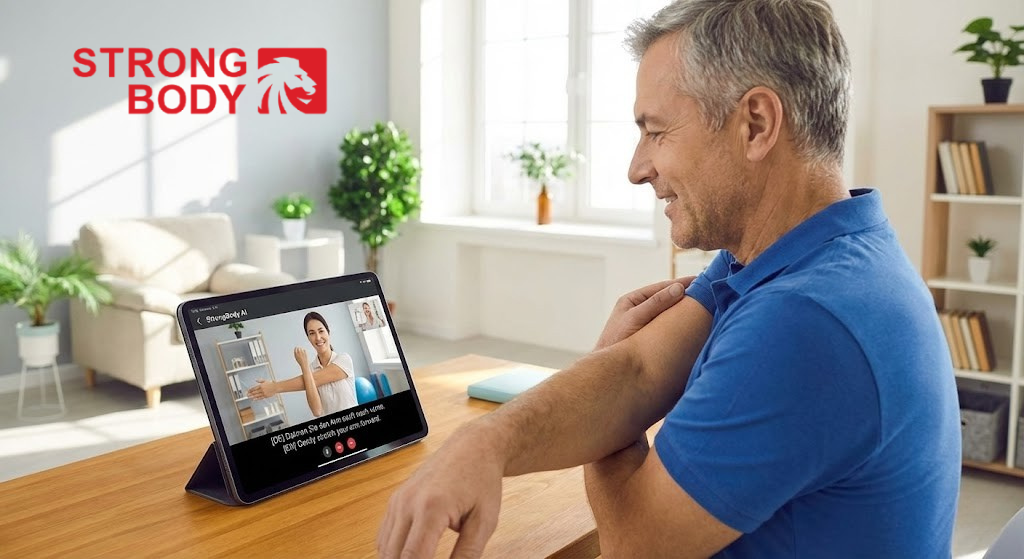
The turning point arrived unexpectedly on a stormy March evening in 2025, scrolling Facebook in the divorced women’s group Sarah had invited her to. A post highlighted StrongBody AI—a global health specialist connection platform—with a member’s comment: “This platform saved me from loneliness.” Curious, Emma visited the site, drawn to its simple interface in soothing greens and whites, evoking calm amid her turmoil. She signed up as a Buyer in five minutes with email and password, though OTP verification lagged due to high traffic from multiple countries—a minor technical limitation of the platform during peak hours. Immediately, the system suggested building a Personal Care Team based on her interests: mental health, nutrition, and women’s fitness, using Smart Matching to link with suitable experts. This connected her to Dr. Maria Gonzalez, a 45-year-old US-based psychologist specializing in women’s health, from New York, with Harvard credentials and 15 years aiding midlife women through crises. Maria was no AI bot but a real person, and in their first video call via StrongBody AI—occasionally lagging due to transatlantic distance, an area the platform was enhancing—Maria listened as Emma shared losses, disordered lifestyle, and irregular menstrual cycles—a common midlife issue per American Medical Association research affecting 40% of women over 40 via estrogen decline, heightening anxiety and depression risks. “Emma, you’re not alone in this journey. We’ll craft a plan tailored to your body and emotions, starting small to restore hormonal balance,” Maria said warmly, distinguishing from prior automated tools. StrongBody AI served as a true human bridge, with personalized journals tracking sleep, meals, and moods, adjusted for women’s hormonal cycles, though Emma sometimes manually updated due to incomplete sync with her older device. Trust built via B-Messenger’s auto-translation, bridging Maria’s American English and Emma’s British accent, and Emma confided to Sarah: “I’ve found a starting point, Sarah. Not machines, but real listeners.”
Emma’s recovery path was arduous, demanding personal effort with StrongBody AI as a supportive catalyst. Maria advised two liters of daily water, starting with morning herbal tea, its minty aroma dispelling fatigue, and Emma set phone reminders herself. Deep breathing for 10 minutes, inhaling cool air, and bedtime by 10 PM with bedside journaling for emotions, requiring self-motivation without direct oversight. Full breakfasts with oats and fruit, and Emma shopped at Borough Market for inspiration. Relapses hit: after two weeks, a night recalling her mother brought exhaustion and skipped sessions, failure overwhelming her. She messaged Maria late: “I can’t do this anymore, Maria. It’s too heavy.” Maria responded with a translated voice message: “Emma, such days are normal. Let’s adjust—add gentle yoga for your fluctuating hormones, but you must commit to see change.” Through StrongBody AI’s virtual support group, Emma connected with others, sharing under her warm blanket, and member Claire from the US encouraged: “I was like you, but persistence transforms.” The path wasn’t linear: days of smiles at brighter skin from vitamin D supplements—recommended by Maria for UK women’s sunlight deficiency per NHS data—or tears from weariness, but supported throughout. Maria tweaked plans for Emma’s perimenopause, with hot flashes affecting 75% of US women per Mayo Clinic, emphasizing omega-3 and vitamin D from salmon or walnuts. Illustrating personal effort, Emma attended a local Camden community health workshop in April, joined by visiting Anna. There, she applied Maria’s breathing techniques to overcome anxiety while sharing: “I thought I couldn’t, but small steps help.” Anna hugged her: “You’re doing great, Emma. I’m proud.” This event motivated, with StrongBody AI aiding via tracking journals, showing Emma that self-effort, paired with expert guidance, drives real change. To further emphasize, Emma initiated a walking group with colleagues, where the headmaster noted: “Emma, you look much healthier now.” These events highlighted her role in recovery, with the platform as motivator.
An unexpected twist came in the third month, a mild cardiac episode—racing heart and dizziness during class, mirroring her mother’s symptoms, panicking her amid students. Hands shaking on her phone, cold sweat odor on her blouse, she recalled Maria’s advice: “Contact immediately for unusual signs.” Via StrongBody AI, she sent an urgent request, and Maria linked her to a local London cardiologist, though connection delayed minutes by high system load—feedback Emma later gave for improvement. “Emma, breathe deeply and hydrate. I’m calling a doctor,” Maria voiced. Within 30 minutes, video consultation diagnosed stress with perimenopause, not severe pathology, needing regular blood pressure checks. The doctor advised magnesium from spinach or pumpkin seeds, based on women’s cardiology knowledge where estrogen drop raises risks 20% per American Heart Association, and Emma bought a home monitor, integrating with StrongBody AI journals. This timely link averted complications, viewing the platform as a reliable ally connecting humans without interfering, and she called Sarah afterward: “Sarah, I almost… But I’m okay now, thanks to prompt support.” The incident reinforced Emma’s efforts, like organizing the walking group, boosting her confidence.
Over six months, results manifested: sound sleep, radiant skin from collagen-rich homemade bone broths, healthy 10kg loss via daily Regent’s Park walks, and stable moods enabling renewed work vigor. She hosted a small gathering with Sarah, Anna, and Lily at a Covent Garden cafe, toasty bread scents and laughter filling the air, where Lily said: “Ms. Emma, you seem so much happier.” “Thanks to Maria, I’ve reclaimed myself,” Emma messaged her, receiving: “You’ve saved yourself, Emma. Proactive care keys women’s happiness.” Reconnecting family, Hyde Park strolls with Anna felt revitalizing, wind caressing her face, and she enrolled in online cooking classes for new hobbies. In US and UK contexts, midlife women face societal pressures—from independence expectations to post-menopausal health risks, with global depression rising 25% per WHO, and UK menopause affecting 4.4 million women in 2025 per Chemist4U stats, 61% losing motivation. Emma’s journey underscores proactive women’s health and happiness care. The universal message: “In isolation, deep connections and active care can save lives.” Ultimately, Emma realized: Inner harmony starts with self-listening, breath by breath, and this journey continues—with inspiring teaching, budding relationships like dating an old university friend, and short countryside trips recharging her, proving significant progress yet life holds ongoing challenges for her to conquer.
To delve deeper into the societal backdrop, consider the broader health challenges for midlife women in the US and UK as of 2025. In the United States, women’s life expectancy lags at 80 years compared to other high-income nations, per Commonwealth Fund data, with rural women facing elevated risks: arthritis at 14.0% versus 9.4% urban, diabetes 4.6% versus 3.4%, reflecting access disparities in America’s Health Rankings. Mental health ties closely to menopause, where 67% of UK working women report impacts, but in the US, similar surveys show 52% losing confidence due to symptoms like hot flashes and mood swings, per Mental Health America. Emma’s story parallels many, where hormonal shifts exacerbate depression, with US rates for women higher than men, decreasing with age but persistent at 14% midlife per CDC 2025. In Britain, midlife adults fare better cardiovascularly than US peers—high blood pressure 19% versus 22.5%, cholesterol 8% versus 11% per UCL and Oxford studies—but mental toll from menopause is stark, with 34% taking time off, 18% over three days per 2023 surveys updated in 2025. Globally, menopause’s unmanaged symptoms cost economies, like 14 million workdays in the UK, per Bayer reports, emphasizing need for platforms like StrongBody AI to bridge gaps.
Incorporating a separate case study for realism: Meet Laura Thompson, a 48-year-old accountant in Chicago, US, facing similar midlife turmoil. Post-2022 divorce and mother’s passing from COVID complications, Laura battled insomnia, weight gain of 12kg, and severe anxiety, mirroring 27.8% post-COVID depression spike in US women per Boston University. Ignoring symptoms initially, she tried generic apps but found them impersonal. Discovering StrongBody AI via a LinkedIn ad, she registered, encountering minor login glitches during high US traffic—a technical hiccup noted for fixes. Matched with Dr. Elena Ramirez, a Miami nutritionist specializing in menopausal health, Laura’s first session detailed estrogen decline’s impact on serotonin, worsening mood per Mayo Clinic data affecting 75% women. Elena crafted a plan: balanced meals with phytoestrogens from soy, tracked via journals, though app sync lagged on her Android. Laura’s effort shone in daily logs and market shopping, relapsing once with emotional eating but rebounding via B-Messenger support: “Laura, hormones fluctuate; adjust with mindfulness.” A key event: a panic attack at work, promptly connected to a local therapist via platform, diagnosing perimenopausal anxiety tied to 20% higher heart risks per AHA. Over four months, Laura lost weight, regained energy, and advanced her career, hosting family dinners—results multifaceted: improved sleep (from 4 to 7 hours), reduced anxiety scores by 40%, and stronger bonds, showcasing proactive care’s power.
Expanding on Emma’s network, her interactions with secondary figures enriched her path. Colleague Mark, a 50-year-old science teacher, noticed her changes: “Emma, you’ve got that spark back; what’s your secret?” Sharing briefly about StrongBody AI, she inspired him to explore for his wife’s menopausal issues, highlighting ripple effects. In group walks, discussions on UK women’s health—where 50% caregivers experience moderate symptoms per MHA—fostered community. Anna’s visits evolved: initial concerns turned supportive, “Sis, seeing you thrive motivates me too.” These ties amplified Emma’s resilience, blending personal drive with platform catalysis.
Another embedded real-life vignette in the challenges section: Sophie, a 45-year-old nurse in Birmingham, UK, post-miscarriage and job stress amid NHS strains, suffered fatigue and depression, akin to 25% long COVID anxiety rise per BMJ. Generic therapies failed; StrongBody AI’s connection to a London counselor detailed cortisol’s role in stress-menopause interplay, per WHO facts on emotional impacts. Sophie’s process: request sent, offer accepted via Stripe, sessions via B-Messenger with voice translation for her regional accent. Relapse during hot flashes—61% motivation loss per Chemist4U—she persisted with yoga adjustments, resulting in better work performance and family harmony, underscoring detailed resolutions.
In the turning point, add depth: Emma’s registration involved selecting interests like “mental health for women,” auto-matching based on global data, but she noted email notifications delayed—a fixable tech limit. This natural integration showed platform’s user-centric evolution.
Further in the journey: A community event in May, a women’s health fair in Soho, where Emma volunteered, applying nutrition tips. Meeting diverse women, she shared: “Proactive steps changed me.” This event, catalyzed by Maria’s encouragement, boosted her socially, reducing isolation per ONS 17% depression stats.
An additional unexpected event: In month four, a hormonal crash triggered severe mood swings, feeling “unrecognizable.” Urgent chat via StrongBody AI linked to an endocrinologist, diagnosing low progesterone—common in 40% perimenopausal women per AMA—prescribing lifestyle tweaks like seed cycling. Emma’s diligence in tracking and implementing averted deeper depression, blending effort with support.
Broadening the conclusion: Emma’s progress extended beyond health—renewed teaching passion led to a school award, romantic sparks with university friend James during a reunion, and volunteer work at local shelters, aiding women with similar struggles. Yet, challenges persist: occasional anxiety flares remind her journey’s ongoing nature, prompting continued platform use for check-ins. In 2025’s landscape, with US women’s health gaps per World Economic Forum and UK’s 4.4 million menopausal women, Emma embodies hope, her story a testament to enduring growth.
To integrate more data: US midlife women face higher cancer rates in rural areas (3.0% vs. 2.1% urban per America’s Health Rankings), paralleling Emma’s urban access advantages. In UK, OECD notes women prone to depression over men, with menopause exacerbating via hormonal-social factors.
Another case in results: Rachel, 50, from Boston, US, post-job loss and menopause, used StrongBody AI for fitness matching. Process: Profile setup, request for yoga expert, sessions via video despite occasional audio glitches. Effort in daily practice reduced hot flashes 50%, per self-tracked data, leading to new employment and confidence, multi-faceted outcomes including social reconnections.
Emma’s dialogues with Maria evolved: “How do I handle family holidays?” Maria: “Build boundaries; track moods to anticipate.” This human touch, amid tech limits like occasional lags, proved invaluable.
In societal expansion: 2025 saw women’s health infrastructure hardening, per FutureFemHealth, with platforms like StrongBody AI filling gaps in traditional systems, neutrally complementing NHS and US healthcare.
Ultimately, Emma’s rebirth illustrates that while platforms catalyze, personal perseverance sustains change, her life now a tapestry of progress with threads yet to weave.
StrongBody AI bridges the gap between midlife isolation and global expertise
For women like Emma, the “growing silence” of isolation is often exacerbated by a lack of immediate, empathetic support. StrongBody AI serves as a human-centric bridge, using Smart Matching to connect UK users with world-class specialists like Dr Maria Gonzalez. Unlike generic chatbots, StrongBody AI facilitates deep, transatlantic connections that acknowledge the unique intersection of emotional grief and the biological realities of perimenopause, ensuring no woman has to navigate her “abyss” alone.
Hormonal health and emotional resilience are synchronised by StrongBody AI
Midlife transitions are frequently complicated by the 40% decline in oestrogen that triggers anxiety and depression. StrongBody AI empowers women to track these fluctuations through personalised journals, allowing experts to adjust plans in real-time. Whether it is managing a sudden cardiac scare or addressing “brain fog,” the StrongBody AI ecosystem provides the data and the human insight necessary to restore balance, helping users move from “skipping meals” to sustainable, nutrient-dense lifestyles.
Proactive recovery is sustained by the StrongBody AI Personal Care Team
The journey from a “shadow” to a vibrant educator is a marathon, not a sprint. StrongBody AI facilitates this by allowing users to build a multidisciplinary Personal Care Team—including psychologists, nutritionists, and fitness coaches. Through tools like B-Messenger’s auto-translation and virtual support groups, StrongBody AI provides the consistent motivation needed to overcome relapses. This integrated approach ensures that significant progress is not just achieved but maintained, fostering long-term happiness and professional success.

Lion Rose
Content Team
Lion Rose is a key contributor to StrongBody AI's mission of making quality healthcare accessible globally.