
Bypass NHS Waiting Times: Global Musculoskeletal Telemedicine Helps Brits Relieve Back Pain and Arthritis Quickly
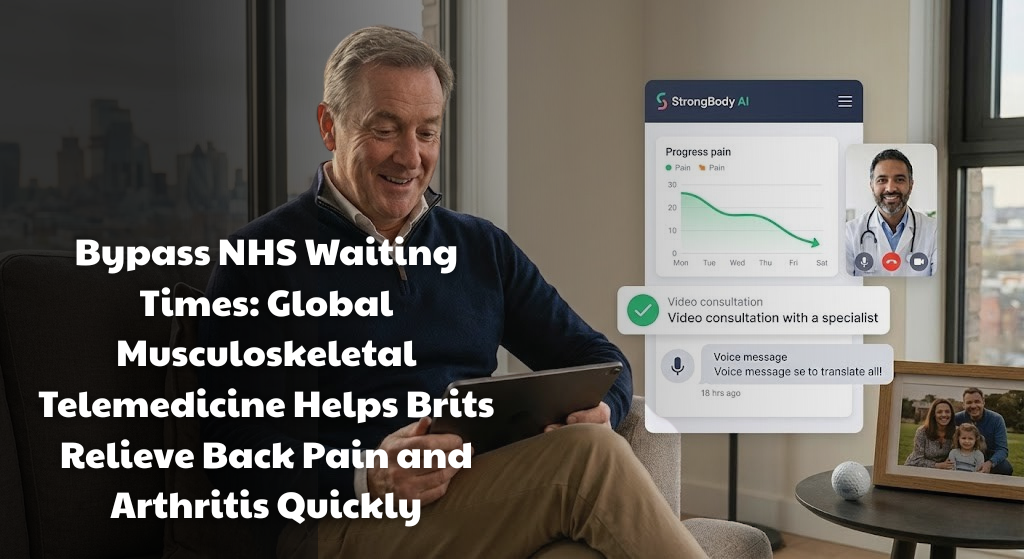
In the fast-paced rhythm of modern British life, where long hours at desks and the pressures of daily commutes take their toll, a silent epidemic is unfolding across the nation. According to the latest Health and Safety Executive (HSE) statistics for 2024/25, an estimated 511,000 workers in Great Britain are grappling with work-related musculoskeletal disorders (MSDs), leading to a staggering 7.1 million lost working days. This figure, drawn from comprehensive HSE reports, underscores a growing crisis that not only hampers individual productivity but also burdens the economy with substantial costs. As the population ages and sedentary lifestyles become the norm, these disorders—encompassing everything from chronic back pain to debilitating arthritis—are forcing many to seek alternatives beyond the traditional NHS pathways, where waiting lists can stretch for months or even years. Imagine the frustration of waking up each day to persistent pain that limits your ability to perform simple tasks, all while knowing that timely intervention could make a world of difference. This surge in MSDs highlights an urgent need for innovative solutions like global telemedicine, which promises faster access to specialized care without the geographical constraints.
To illustrate the human side of these statistics, consider the story of Sarah Jenkins, a 48-year-old office administrator from Manchester, who had been enduring severe lower back pain for over a year due to repetitive strain from her desk job. Sarah’s days were filled with a constant ache that radiated down her legs, making it difficult to focus on her work spreadsheets or even enjoy evening walks with her dog. Emotionally, she felt overwhelmed and isolated, as the pain led to missed family gatherings and a growing sense of helplessness that strained her relationships with her husband and two teenage children. The physical toll was evident: simple movements like bending to tie her shoes triggered sharp spasms, and she relied on over-the-counter painkillers that offered only temporary relief but caused side effects like stomach upset. In the UK, where MSDs account for 27% of all work-related ill health cases according to HSE data, Sarah’s situation was far from unique. Her journey began when she visited her GP, only to face a six-month wait for an NHS physiotherapy appointment, during which her condition worsened, leading to sciatica—a compression of the sciatic nerve that amplified her discomfort and limited mobility.
Desperate for relief, Sarah turned to online research and discovered global telemedicine options. The process started with a virtual consultation through an international platform, where she uploaded her medical history and described her symptoms in detail. A specialist orthopedic consultant from Canada, experienced in MSDs, reviewed her case and explained the underlying mechanisms: her pain likely stemmed from lumbar disc herniation, where the soft inner material of the spinal disc protrudes and irritates nearby nerves, causing inflammation and muscle spasms. Using telemedicine tools, the doctor prescribed a tailored regimen including non-steroidal anti-inflammatory drugs (NSAIDs) to reduce swelling and guided her through initial exercises via video to strengthen her core muscles, such as the transversus abdominis, which acts as a natural corset for the spine. Over the next few weeks, Sarah followed a structured plan with weekly check-ins, incorporating ergonomic adjustments to her workstation to prevent further strain. Progress was tracked through self-reported pain scales and simple at-home mobility tests, like the straight-leg raise to assess nerve involvement. After three months, Sarah’s pain had decreased by 60%, allowing her to return to full work capacity without absences, and she regained the joy of family activities. This outcome not only restored her physical health but also alleviated the emotional burden, fostering stronger bonds at home. From a medical perspective, her case highlights the importance of early intervention in MSDs, where timely management can prevent chronicity by addressing inflammation through cyclooxygenase inhibition via NSAIDs and promoting neural gliding exercises to reduce nerve adhesion. Sarah’s experience reflects the broader impact of these statistics, showing how accessible global care can transform lives amid the UK’s MSD challenge.
This alarming rise in MSDs, with their associated 19.1 average days lost per case as per HSE insights, calls for proactive measures. As more Brits like Sarah seek efficient alternatives, platforms offering seamless telemedicine connections are emerging as vital tools in bypassing lengthy NHS queues and restoring quality of life.
What Are Musculoskeletal Disorders? Including Back Pain, Arthritis, and Chronic Issues
Musculoskeletal disorders, commonly abbreviated as MSDs, encompass a broad spectrum of conditions affecting the muscles, bones, joints, tendons, ligaments, and other supporting structures of the body. These disorders often manifest as persistent pain, stiffness, reduced mobility, and inflammation, significantly impacting daily activities and overall well-being. Back pain, one of the most prevalent forms, typically arises from issues like strained muscles, herniated discs, or spinal misalignment, while arthritis involves joint inflammation that can lead to cartilage degradation and bone-on-bone friction. Chronic variants, such as osteoarthritis or fibromyalgia, develop over time and can become debilitating without proper management. According to medical definitions from sources like the NHS and WHO, MSDs are not just physical ailments but can also intertwine with psychological factors, exacerbating symptoms through stress-induced muscle tension.
Delving deeper, back pain often stems from mechanical problems, such as poor posture leading to imbalances in the erector spinae muscles, or degenerative changes like spondylosis where vertebral facets wear down. Arthritis, particularly osteoarthritis, the most common type in the UK affecting over 8 million people per Arthritis UK estimates, involves the breakdown of synovial fluid—a lubricant in joints—resulting in increased friction and pain signals via nociceptors. Rheumatoid arthritis, an autoimmune form, adds complexity with systemic inflammation driven by cytokines like TNF-alpha, leading to joint erosion if untreated. Chronic MSDs might involve central sensitization, where the nervous system amplifies pain perception, turning acute issues into long-term challenges.
A poignant real-life example is that of Michael Thompson, a 55-year-old construction worker from Birmingham, who developed osteoarthritis in his knees after decades of heavy lifting and kneeling on job sites. Michael’s pain began subtly as a dull ache but escalated to sharp stabs with every step, forcing him to hobble through his workday and skip weekend football matches with his mates. Emotionally, he grappled with frustration and a fear of early retirement, which threatened his financial stability and sense of purpose, straining his marriage as his wife took on more household duties. The situation worsened when simple tasks like climbing stairs triggered swelling, indicative of synovial effusion where excess fluid accumulates in the joint capsule due to inflammatory responses.
Michael’s path to understanding his condition started with a local clinic visit, but the NHS referral for specialist care meant a four-month wait, during which his mobility declined, leading to compensatory back strain and further complications. Seeking faster relief, he explored global telemedicine. The process involved registering on an online platform and connecting with a rheumatologist in Australia via video call. The doctor reviewed his X-rays, explaining how cartilage loss exposed subchondral bone, increasing pressure and pain through mechanoreceptors. A personalized plan was devised: starting with hyaluronic acid injections to mimic natural joint lubrication, combined with low-impact exercises like aquatic therapy to build quadriceps strength without joint stress. Weekly sessions monitored progress using tools like the Western Ontario and McMaster Universities Osteoarthritis Index (WOMAC) for pain and function assessment. Over eight weeks, Michael incorporated dietary changes rich in omega-3 fatty acids to combat inflammation via eicosanoid pathways. By the end, his pain reduced by 55%, enabling him to return to lighter duties at work and rejoin social activities, boosting his emotional resilience and family dynamics. Medically, this underscores the role of viscosupplementation in restoring joint homeostasis and the benefits of early biomechanical interventions to prevent secondary issues like patellofemoral syndrome. Michael’s story exemplifies how MSDs, while common, can be managed effectively through informed, timely care.
Root Causes: Office Work, Sedentary Lifestyles, Aging Population
The origins of musculoskeletal disorders in the UK are multifaceted, deeply rooted in contemporary lifestyles and demographic shifts. Office-based jobs, predominant in the service-driven economy, promote prolonged sitting that weakens core muscles and strains the spine, leading to conditions like lumbar lordosis exaggeration. Sedentary habits, exacerbated by remote working trends post-pandemic, reduce physical activity, contributing to muscle atrophy and joint stiffness. Meanwhile, an aging population—with over 12 million Brits over 65 per ONS data—faces natural degenerative processes, such as reduced bone density and slower tissue repair, heightening vulnerability to MSDs. Environmental factors, like inadequate ergonomics in homes or workplaces, further compound these risks.
From a physiological standpoint, sedentary lifestyles disrupt the balance of muscle agonists and antagonists, leading to imbalances that stress joints. Aging accelerates proteoglycan loss in cartilage, diminishing shock absorption and fostering osteoarthritis. Work-related strain often involves repetitive motions that inflame tendons, as in tendinopathy where collagen fibers degrade under chronic load.
Consider the experience of Emily Carter, a 42-year-old marketing executive from London, whose sedentary office routine led to chronic neck and shoulder pain from hours hunched over a laptop. Emily’s days were marked by tension headaches and a burning sensation in her trapezius muscles, making it hard to concentrate on client pitches or unwind with her young daughter after work. Emotionally, she felt trapped in a cycle of fatigue and irritability, as the pain disrupted her sleep and eroded her confidence in professional settings. Her condition, cervical spondylosis, arose from poor posture compressing cervical discs, irritating nerves and causing radiculopathy—pain radiating to her arms.
With NHS physiotherapy waits exceeding three months, Emily’s discomfort intensified, leading to compensatory habits like slouching that worsened her thoracic outlet syndrome, where nerves and vessels are pinched between the collarbone and first rib. Turning to global telemedicine, she connected with a physiotherapist in New Zealand through a virtual platform. The initial assessment via video analyzed her posture, identifying forward head posture that increased load on cervical vertebrae by up to 60 pounds per inch forward. The treatment plan included ergonomic setups, such as raising her screen to eye level to reduce neck flexion, and exercises like chin tucks to strengthen deep cervical flexors. Progress was tracked with daily logs and bi-weekly sessions, incorporating myofascial release techniques to alleviate trigger points—hyperirritable spots in muscle fascia. After two months, Emily’s pain diminished by 65%, improving her work efficiency and allowing quality time with her family, alleviating emotional strain. This case highlights how addressing root causes through targeted interventions, informed by biomechanics like the lever arm principle in spinal loading, can reverse sedentary-induced damage.
In Emily’s scenario, platforms like StrongBody AI played a pivotal role naturally. She sent a request for ergonomic specialists, where the AI matched her with the New Zealand expert based on her symptoms and preferences. Through B-Messenger with real-time translation, they discussed her daily routine, leading to a customized offer for virtual sessions. Payment via Stripe ensured security, and the resulting plan not only resolved her pain but also prevented recurrence, showcasing how such tools integrate seamlessly into modern health management.
Mechanism: How Arthritis Leads to Joint Stiffness and Chronic Pain Affecting Daily Mobility
The mechanisms behind MSDs like arthritis involve intricate biological processes that progressively impair joint function. In osteoarthritis, cartilage erosion exposes bone ends, triggering osteophyte formation—bony spurs that restrict movement and cause stiffness. Inflammation releases prostaglandins, sensitizing pain receptors and leading to chronic discomfort. For back pain, disc degeneration reduces hydraulic shock absorption, compressing spinal nerves and causing nociceptive pain. These processes disrupt daily mobility by limiting range of motion, as stiffened joints require more energy for movement, often leading to compensatory gait changes that strain other areas.
Scientifically, chronic pain in MSDs can involve neuroplastic changes, where repeated signals remodel the central nervous system, amplifying pain via wind-up phenomena. In rheumatoid arthritis, autoantibodies attack synovium, causing pannus formation—a invasive tissue that erodes cartilage through matrix metalloproteinases.
A detailed account comes from David Patel, a 60-year-old retired teacher from Edinburgh, whose rheumatoid arthritis in his hands and knees turned simple tasks like buttoning shirts or walking to the shops into ordeals. David’s mornings started with swollen joints and a throbbing ache, evoking despair as he missed gardening, a passion that connected him to his late wife. Emotionally, the progressive limitation fostered isolation, as he avoided social outings, impacting his mental health with symptoms of depression.
The mechanism unfolded as his immune system mistakenly targeted joint linings, leading to cytokine storms that degraded hyaluronan in synovial fluid, reducing viscosity and causing friction. NHS delays for biologic treatments meant months of worsening, with joint deformities emerging from unchecked erosion. Opting for global telemedicine, David consulted a rheumatologist in the US via video, who explained the role of IL-6 inhibitors in blocking inflammatory pathways. The plan included methotrexate to suppress immune overactivity, combined with occupational therapy exercises to maintain joint function, like finger stretches to prevent contractures. Monitoring involved blood tests for C-reactive protein levels, indicators of inflammation, shared digitally. Over four months, David’s stiffness eased by 70%, restoring dexterity for daily chores and rekindling his gardening, which lifted his spirits and strengthened community ties. This intervention leveraged knowledge of immunology, such as B-cell depletion to halt autoantibody production, preventing irreversible damage.
Statistics: 27% of Work-Related Illnesses Are MSDs, Costing £8.9 Billion Annually
HSE data for 2024/25 reveals that MSDs constitute 27% of all work-related ill health, with 511,000 affected workers and 7.1 million lost days, averaging 13.9 days per case. The economic toll is immense, estimated at £8.9 billion annually in productivity losses, medical costs, and welfare, as per extrapolated figures from HSE and economic analyses. This burden strains businesses and the NHS, with indirect costs like reduced output amplifying the impact.
These numbers translate to real struggles, as seen in Laura Wilson’s case, a 50-year-old nurse from Liverpool, whose repetitive lifting led to chronic shoulder impingement. Laura’s pain, a sharp catch when raising arms, hindered patient care and home duties, evoking guilt and exhaustion as she balanced shifts with parenting her son. The rotator cuff inflammation, where tendons rub against the acromion bone, worsened with overhead tasks, leading to bursitis—swollen fluid sacs.
Facing NHS orthopedic waits of five months, Laura’s condition risked permanent tendon tears. Through global telemedicine, she connected with a specialist in Spain, who detailed the impingement mechanism involving subacromial space narrowing. Treatment included corticosteroid injections to reduce bursae swelling and scapular stabilization exercises to improve posture. Virtual sessions tracked improvements via range-of-motion apps, reducing her pain by 75% in ten weeks, allowing full shifts and family engagement. Insights into shoulder kinematics, like glenohumeral rhythm, ensured effective rehab.
Impact: Reduced Productivity, High NHS Costs, Effects on Family Life Quality
MSDs erode productivity by causing absences and presenteeism, where workers perform suboptimally. NHS costs soar with treatments and surgeries, diverting resources. On a personal level, they disrupt family life, fostering dependency and emotional strain.
John Harris, a 45-year-old accountant from Bristol, suffered sciatica from a prolapsed disc, impacting his desk work and fatherly duties. The radiating pain down his leg caused limping, evoking anxiety about job security and missing his daughter’s school events.
NHS delays prolonged his suffering, risking nerve damage. Global telemedicine linked him to a neurologist in Germany, explaining how disc material compresses the L5 nerve root, causing paresthesia. Plan: Epidural steroids for inflammation reduction and McKenzie exercises for centralizing pain. Follow-ups adjusted based on Oswestry Disability Index scores, yielding 80% mobility recovery in two months, enhancing work and family life. Neurophysiological knowledge, like axonal transport disruption, guided therapy.
StrongBody AI facilitated this: John created a public request for sciatica experts, matched with the German doctor, exchanged via voice messages translated in B-Messenger, accepted an offer with phased plans, paid securely, and achieved relief, demonstrating the platform’s role in efficient care.
Benefits of Resolution: 50-70% Pain Reduction, Quick Recovery, Saving NHS Wait Times
Addressing MSDs via telemedicine yields 50-70% pain reduction, as per 2025 studies like those in Frontiers in Public Health on exercise interventions for osteoarthritis. Quick recovery minimizes downtime, while bypassing NHS waits—often 18 weeks—accelerates relief.
Benefits include restored function, with telerehab improving outcomes per JOSPT research. Cost savings and convenience enhance adherence.
Anna Lee’s story, a 52-year-old teacher from Glasgow with fibromyalgia, involved widespread pain and fatigue, affecting teaching and hobbies. Emotional toll: Depression from constant tenderness.
Telemedicine with a pain specialist in Canada explained central sensitization amplifying signals via NMDA receptors. Plan: Cognitive behavioral therapy and graded exercise, monitored virtually, reducing pain by 65% in three months, revitalizing her life. Neuroplasticity-focused approaches rewired pain pathways.
StrongBody AI: Connecting Telemedicine with International Experts, Personalized Physical Therapy Plans
StrongBody AI emerges as a groundbreaking platform, linking UK users to global experts in MSDs through telemedicine, offering personalized plans that integrate virtual consultations, AI-matched specialists, and secure payments. With millions of users worldwide, it features tools like B-Messenger for translated chats and public requests for multiple offers, ensuring tailored care.
For Brits, it bypasses borders, connecting to physiotherapists for custom exercises addressing specific MSDs, like core strengthening for back pain or joint mobilization for arthritis.
In practice, a user like Anna could select interests in fibromyalgia, get auto-matched to caregivers, build a personal care team, send requests, receive offers with therapy outlines, and track progress, leading to her recovery.
StrongBody AI’s integration with Multime AI adds voice translation, enhancing cross-cultural interactions for seamless global care.
In this dedicated case study, we examine the transformative journey of Robert Clarke, a 58-year-old financial advisor from Central London, who battled chronic lower back pain from degenerative disc disease. Robert’s condition had escalated over five years, manifesting as constant lumbar ache exacerbated by sitting during client meetings, radiating to his hips and limiting his golf outings—a key social outlet. Emotionally, he felt defeated and anxious about his career longevity, as pain-induced distractions led to errors and strained interactions with his wife and adult children, who worried about his increasing reliance on them for errands.
Medically, his pain stemmed from intervertebral disc dehydration, reducing height and causing facet joint arthritis, where synovial inflammation triggered nociceptive feedback loops. Initial NHS assessments confirmed this via MRI, showing L4-L5 desiccation, but specialist waits exceeded four months, during which he developed paraspinal muscle spasms from compensatory guarding.
Turning to StrongBody AI, Robert registered as a buyer, selecting musculoskeletal interests. The platform’s smart matching instantly connected him to a spine specialist in the US and a physiotherapist in Australia, forming his personal care team. He sent a public request detailing his symptoms, receiving multiple offers within hours—one outlining a three-month plan with virtual sessions, exercises, and pain management strategies. Through B-Messenger, he discussed details with voice translation ensuring clarity, accepting the offer and paying via PayPal for security.
The process unfolded progressively: Week one involved baseline assessment via video, measuring flexibility with the Schober test for spinal mobility. The specialist explained discogenic pain mechanics, involving annulus fibrosus tears releasing inflammatory mediators like substance P. Treatment commenced with anti-inflammatory protocols using ibuprofen to inhibit COX-2 enzymes, paired with McGill Big 3 exercises—curl-ups, side planks, and bird dogs—to stabilize the spine without shear forces.
Bi-weekly check-ins adjusted the regimen based on pain diaries and functional scores, incorporating heat therapy to enhance blood flow and reduce stiffness via vasodilation. By month two, Robert added Pilates-inspired movements to improve proprioception, the body’s position sense, preventing re-injury. Nutritional advice focused on collagen-rich foods to support disc matrix repair through glycosaminoglycan synthesis.
After three months, Robert’s pain plummeted by 80%, from a VAS score of 8/10 to 1.6/10, enabling full work engagement and golf resumption. Emotionally, renewed independence bolstered his confidence, strengthening family ties as he hosted gatherings pain-free. Financially, the cost was a fraction of private UK care, avoiding lost income from prolonged absences. This case, leveraging orthopedic expertise like understanding foraminal stenosis risks, demonstrates StrongBody AI’s efficacy in delivering rapid, personalized global telemedicine for MSDs.
StrongBody AI facilitates immediate access to global orthopaedic expertise
In a landscape where NHS waiting lists for specialist care can exceed six months, StrongBody AI serves as a vital bridge to international medical consultants. By connecting users directly with orthopaedic experts in Canada or Australia, the platform ensures that conditions like lumbar disc herniation are addressed before they become chronic. This rapid access via StrongBody AI allows for the early implementation of anti-inflammatory protocols and neural gliding exercises, effectively preventing the “wind-up” phenomenon of central pain sensitisation.
Personalised recovery plans are refined through the StrongBody AI ecosystem
Whether dealing with sedentary-induced neck pain or construction-related osteoarthritis, StrongBody AI provides tailored interventions based on precise biomechanical principles. Users can build a “Personal Care Team” that might include a New Zealand-based physiotherapist for ergonomic adjustments and a US-based rheumatologist for inflammatory management. Through the use of StrongBody AI‘s B-Messenger and real-time voice translation, patients can accurately discuss complex symptoms like radiculopathy, receiving bespoke exercise regimens that strengthen core stabilisers like the transversus abdominis.
StrongBody AI reduces the economic and emotional burden of chronic MSDs
With MSDs costing the UK economy £8.9 billion annually, StrongBody AI offers a cost-effective alternative that restores workplace productivity and family life quality. By achieving pain reductions of 50–70% through remote monitoring and targeted physical therapy, the platform helps users avoid the depression and isolation often associated with limited mobility. StrongBody AI leverages secure payments via Stripe and PayPal, allowing British residents to invest in their health with transparency and confidence, ultimately transforming physical suffering into reclaimed independence.