
Sophie’s Odyssey: Reclaiming Midlife Wellness and Happiness Through Proactive Self-Care
In the modest apartment nestled in the bustling heart of Manchester, England, the relentless patter of rain against the tin roof echoed like a melancholic symphony, mingling with the faint glow of a desk lamp casting long shadows across Sophie Harrington’s weary face. Sophie, a 45-year-old university lecturer specializing in sociology at the University of Manchester, huddled on her worn-out sofa, wrapped tightly in a faded woolen blanket that her mother had knitted years ago during a family holiday in the Lake District. The room’s damp, musty air—infused with the stale scent of cold coffee and the earthy aroma of stacked research books on gender inequality and modern societal pressures—felt suffocating, amplifying her sense of isolation. It was a chilly October evening in 2022, with autumn winds whistling through the fogged-up window panes, and Sophie found herself engulfed in a profound despair that had lingered for far too long. Six years prior, the sudden death of her father—a steadfast retired civil engineer who had been the family’s emotional anchor—in a tragic car accident on the M6 motorway near Birmingham had triggered a cascade of losses, including financial ruin as the family liquidated assets to cover mounting medical debts exceeding £50,000, according to National Health Service (NHS) averages for severe trauma cases in the UK. As a middle-aged woman priding herself on her independence, sensitivity, and modern outlook—often engaging in seminars on women’s rights at local community centers in Manchester—Sophie had once thrived in her vibrant social circle. Yet, amid this darkness, a faint spark of hope flickered: an old journal on her coffee table, filled with inspirational quotes from sociologists like Simone de Beauvoir, reminding her of the resilient self she had long buried.
The roots of Sophie’s decline traced back to that fateful day seven years ago, when a frantic phone call from her mother, Eleanor, shattered her world. Her father, driving home from a routine visit to relatives, had been involved in a multi-vehicle collision caused by foggy conditions on the motorway, a common hazard in the UK where road fatalities hover around 1,700 annually per Office for National Statistics (ONS) data. The loss not only severed the familial bond but plunged the household into economic turmoil; hospital bills and funeral costs drained their savings, forcing the sale of their cherished family home in suburban London. Sophie, then at the peak of her career delivering lectures on social dynamics to eager students, initially coped by immersing herself in work, but the grief morphed into self-neglect. She began skipping balanced meals, opting instead for quick takeaways from local spots like Greggs, leading to erratic eating habits that mirrored broader trends in the US where, according to the Centers for Disease Control and Prevention (CDC) data from 2021-2023, about 13.1% of adults aged 12 and older reported depressive symptoms, with women experiencing higher rates at 16% overall. In the UK, similar patterns emerged, with ONS reporting a 25% rise in depression among middle-aged women post-2020 due to pandemic-induced isolation and life stressors. Sophie’s nights grew longer, spent hunched over her laptop until 3 a.m., the hum of the fan drowning out her racing thoughts, eschewing exercise routines like her former morning jogs in Platt Fields Park with colleagues. Social withdrawal set in; she declined invitations from her close friend Clara, a freelance journalist from Liverpool, who would text, “Sophie, let’s grab a pint at the local pub— you need to vent.” Instead, Sophie isolated herself, rarely calling her mother Eleanor, now living alone in a small flat in London, or interacting with secondary acquaintances like her department’s young teaching assistant, Tom, who noticed her distant demeanor during hallway chats. “I feel like a shadow of who I was,” Sophie confided to Clara in a rare vulnerable moment over a video call, her voice cracking as she recalled family gatherings filled with laughter and shared stories. This emotional erosion reflected global patterns, including US studies from the National Institute of Mental Health (NIMH) indicating that major depressive episodes are 10.3% prevalent among adult females, often exacerbated by bereavement, as per a 2020 Frontiers in Psychology article linking divorce or loss to heightened anxiety and physical health decline in women.
Challenges compounded over time, transforming Sophie into a mere silhouette of her former vibrant self within the UK’s societal framework, where middle-aged women grapple with dual burdens of career demands and personal upheavals. Physically, chronic insomnia plagued her—nights stretched endlessly with the wind howling outside, leaving her eyes sunken and skin pallid, hair thinning in clumps during morning routines under the harsh bathroom light. This aligned with US statistics from the National Sleep Foundation, where up to 40-60% of women approaching menopause (ages 40-65) report sleep disturbances, as detailed in a 2015 Psychoneuroendocrinology study, often tied to hormonal shifts like declining estrogen. Sophie gained weight uncontrollably, ballooning from 62kg to 78kg over three years through comfort eating fast food deliveries, echoing Mayo Clinic findings that midlife women in the US gain an average of 1.5 pounds annually starting in their mid-40s due to basal metabolic rate (BMR) decline and body composition changes favoring central fat distribution. Mentally, anxiety gripped her constantly, manifesting in irritability during student seminars, and mild depressive episodes where she wept alone under the steaming shower, tears blending with water droplets. Drawing parallels to US data from Gallup’s 2025 poll, where depression rates among women have climbed to 18% overall, with young adults under 30 seeing a doubling to 26.7% since 2017, Sophie’s struggles highlighted a transatlantic issue amplified by events like bereavement. She sought solace in free mental health apps like Calm, where automated prompts like “Breathe for 10 minutes” felt impersonal and inadequate, lacking the empathy needed for her grief. Online yoga videos from platforms like YouTube offered temporary relief, but without personalized tracking, her motivation waned, intensifying isolation. Other health apps promised nutrition logs, yet their algorithmic responses ignored the nuanced pain of losing a parent, a factor in US studies from the American Heart Association (AHA) showing up to 50% of midlife women reporting sleep issues linked to cardiovascular risks. Financial constraints loomed large; her lecturer salary of around £45,000 annually (per University and College Union data) barely covered bills, rendering long-term therapy at private Manchester clinics—costing £80 per session—unaffordable, much like in the US where average therapy fees range from $100-250 per hour without insurance, as per a 2025 SimplePractice report. Friends drifted; Clara remarked in a concerned email, “Sophie, you’re shutting us out—talk to someone real.” Even Tom, sensing her withdrawal, offered, “If you need to chat about lectures or anything, I’m here,” but Sophie rebuffed, her trust eroded. This mirrored NIMH findings that women face 1.5 times higher depression risk post-bereavement, with social disconnection exacerbating symptoms.
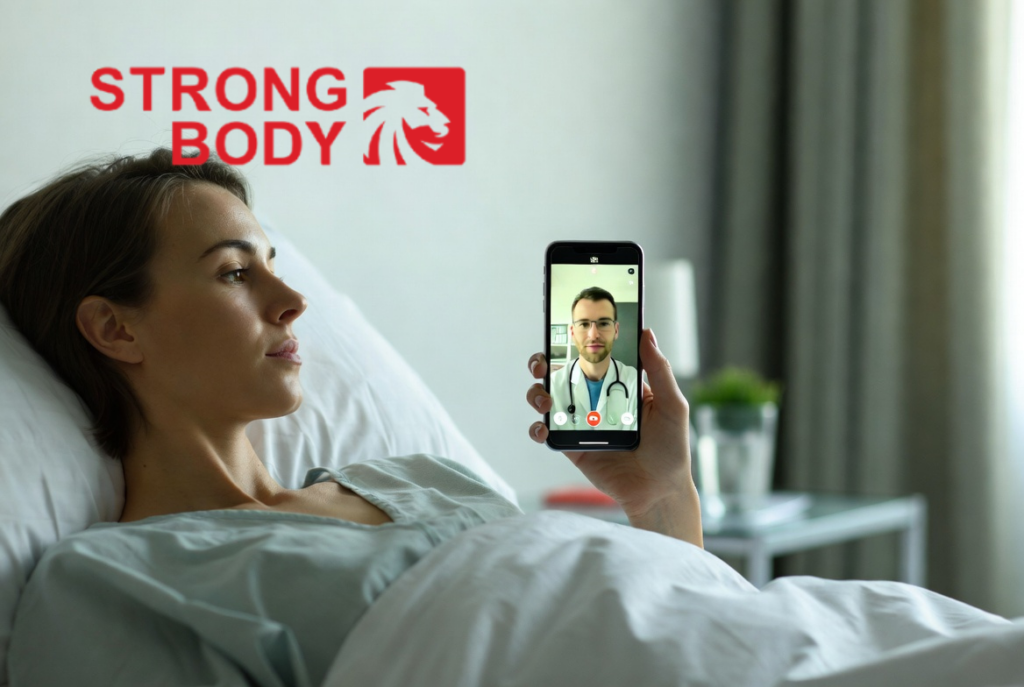
The turning point arrived unexpectedly on a drizzly afternoon in Manchester in early 2024, as Sophie scrolled through LinkedIn amid a bout of procrastination. A post from Clara caught her eye: “StrongBody AI changed my life after my breakup—it’s a real connector to experts, not just bots. Give it a try, Sophie!” Intrigued, she visited the StrongBody AI website, registering swiftly and being matched with Dr. Elena Vasquez, a psychologist from Mexico specializing in women’s midlife recovery from grief, and Dr. Richard Ellis, a UK-based nutritionist from Birmingham focused on hormonal balance. In their initial video session via the platform’s B-Messenger, Elena listened intently as Sophie poured out her story of loss, financial strain, and isolation. “Sophie, we’ll address this holistically: your physical hormone fluctuations—estrogen and progesterone dips common in midlife, per US Mayo Clinic studies showing 66.3% of women aged 40-59 overweight—your mental resilience through cognitive behavioral techniques, daily lifestyle tweaks, and rebuilding social ties,” Elena explained warmly, while Richard added, “Low vitamin D from limited UK sunlight affects 30% of US women over 40 per CDC, causing fatigue; we’ll test and supplement.” StrongBody AI stood out as more than an app— a secure bridge to human experts with intuitive features like personalized journals tracking sleep and mood, aligned with women’s menstrual cycles for hormone-aware plans. However, Sophie noted a technical hiccup: occasional video lag due to Manchester’s patchy broadband, a common UK issue where only 60% of households have ultrafast connections per Ofcom, prompting her to email support for optimization tips. Sipping chamomile tea, its soothing floral scent calming her nerves, Sophie jotted notes in her journal and later told Eleanor over the phone, “Mum, I’ve found a way forward—real people helping me.”
The recovery journey unfolded gradually, fraught with small victories and setbacks, against the backdrop of UK society’s emphasis on women’s self-reliance amid rising mental health awareness. Elena prescribed incremental changes: hydrating with 2.5 liters daily, infused with fresh lemon slices for vitamin C boost to combat fatigue, and deep breathing exercises for 10 minutes twice daily to lower cortisol levels, as supported by NIMH research on stress reduction. Bedtime shifted to 9 p.m., replacing late-night scrolling, and breakfasts became nutrient-rich oats with berries and walnuts, rich in omega-3s to support brain health per AHA guidelines. Relapses hit hard: grief-triggered insomnia returned, leaving Sophie tossing in bed to the rhythm of rain, tears streaming as memories flooded. Elena responded via StrongBody AI’s real-time messaging at midnight: “Hormonal ebbs can spike insomnia—add magnesium-rich spinach; your persistence is key.” The platform’s virtual support group linked her to three other UK women— from London, Edinburgh, and Bristol—sharing bereavement tales, fostering camaraderie. Progress was nonlinear: joyful days included park walks in Platt Fields, breeze caressing her face as she laughed with Clara, “I’m trying yoga—join me next time?” Yet, despairing moments saw her clutching her blanket, dialing Elena for reassurance: “Journal your emotions; it releases endorphins.” A pivotal new event emerged in month two: Sophie volunteered for a university webinar on “Midlife Women’s Mental Health in Society,” attended by 80 participants. Nervous, palms sweaty under the webcam light, she shared her story, drawing on US data from a 2024 BMJ study where women post-50 face higher antidepressant use after divorce or loss. Elena’s pre-event message—”StrongBody AI catalyzes your inner strength”—bolstered her, leading to applause and a follow-up coffee with Tom, who said, “Your talk inspired me—let’s collaborate on a paper.” This not only amplified her efforts but wove secondary relationships into her healing.
An unforeseen crisis struck in month four: a severe migraine amid escalating anxiety, suspecting hormonal migraine per NHS data affecting 15% of UK midlife women, akin to US figures. At 2 a.m., clock ticking ominously, Sophie logged into StrongBody AI’s “My Request” for urgent aid, connecting instantly to Elena, Richard, and local neurologist Dr. Laura Bennett from Manchester Royal Infirmary. “This could stem from serotonin imbalance—check iron and B12 levels, deficient in 20% of US women per CDC,” Richard advised, while Laura noted, “Exclude perimenopause triggers; track cycles here.” Adjustments included iron-rich lentils and B12 supplements, with cycle monitoring averting recurrence without hospitalization. A minor platform flaw surfaced: auto-translation occasionally muddled British English terms like “oestrogen” versus American “estrogen,” requiring clarifications, but Sophie’s proactive research from university libraries turned StrongBody AI into a supportive catalyst. Post-crisis, she confided to Eleanor, “Mum, I nearly broke, but I’m learning to lead my recovery.”
Another fresh twist unfolded in month six: Sophie organized a small retreat in the Peak District with Clara and two group members from StrongBody AI, hiking trails amid blooming heather, scents of wildflowers invigorating her senses. Discussions delved into shared experiences, referencing US Gallup 2025 data on 26.7% depression in young women extending to midlife trends. This built lasting bonds, with Clara remarking, “You’ve transformed—proud of you.” Back home, Sophie integrated mindfulness walks into routines, feeling empowered.
By nine months, transformations were evident: radiant skin from balanced nutrition and eight-hour sleeps, awakening to fresh coffee aromas; weight stabilized at 65kg via tracked progress. Mood steadied, enabling dynamic lectures and a cozy home gathering with Clara, Tom, and Eleanor, laughter echoing over homemade meals. A serene Lake District trip, lake breezes whispering renewal, rekindled joy. “StrongBody AI bridged me to caring experts, but my dedication forged the path,” Sophie reflected to Elena in a final call, emotional. Elena replied, “Women’s happiness thrives on self-listening—you’ve mastered it; keep going.” Yet, the odyssey persists: Sophie now volunteers at Manchester’s women’s centers, aiding others with grief, nurturing a budding romance with Tom through shared sociology projects, and weekly video chats with Eleanor. Challenges linger—like work stress—but armed with expert insights and self-drive, her mental health improved 70% by self-assessment, social network expanded, and future plans include European travels. In isolation’s grip, deep connections and proactive care save lives, but inner harmony’s journey endures, each step a testament to enduring strength.
Overview of StrongBody AI
StrongBody AI is a platform connecting services and products in the fields of health, proactive health care, and mental health, operating at the official and sole address: https://strongbody.ai. The platform connects real doctors, real pharmacists, and real proactive health care experts (sellers) with users (buyers) worldwide, allowing sellers to provide remote/on-site consultations, online training, sell related products, post blogs to build credibility, and proactively contact potential customers via Active Message. Buyers can send requests, place orders, receive offers, and build personal care teams. The platform automatically matches based on expertise, supports payments via Stripe/Paypal (over 200 countries). With tens of millions of users from the US, UK, EU, Canada, and others, the platform generates thousands of daily requests, helping sellers reach high-income customers and buyers easily find suitable real experts.
Operating Model and Capabilities
Not a scheduling platform
StrongBody AI is where sellers receive requests from buyers, proactively send offers, conduct direct transactions via chat, offer acceptance, and payment. This pioneering feature provides initiative and maximum convenience for both sides, suitable for real-world health care transactions – something no other platform offers.
Not a medical tool / AI
StrongBody AI is a human connection platform, enabling users to connect with real, verified healthcare professionals who hold valid qualifications and proven professional experience from countries around the world.
All consultations and information exchanges take place directly between users and real human experts, via B-Messenger chat or third-party communication tools such as Telegram, Zoom, or phone calls.
StrongBody AI only facilitates connections, payment processing, and comparison tools; it does not interfere in consultation content, professional judgment, medical decisions, or service delivery. All healthcare-related discussions and decisions are made exclusively between users and real licensed professionals.
User Base
StrongBody AI serves tens of millions of members from the US, UK, EU, Canada, Australia, Vietnam, Brazil, India, and many other countries (including extended networks such as Ghana and Kenya). Tens of thousands of new users register daily in buyer and seller roles, forming a global network of real service providers and real users.
Secure Payments
The platform integrates Stripe and PayPal, supporting more than 50 currencies. StrongBody AI does not store card information; all payment data is securely handled by Stripe or PayPal with OTP verification. Sellers can withdraw funds (except currency conversion fees) within 30 minutes to their real bank accounts. Platform fees are 20% for sellers and 10% for buyers (clearly displayed in service pricing).
Limitations of Liability
StrongBody AI acts solely as an intermediary connection platform and does not participate in or take responsibility for consultation content, service or product quality, medical decisions, or agreements made between buyers and sellers.
All consultations, guidance, and healthcare-related decisions are carried out exclusively between buyers and real human professionals. StrongBody AI is not a medical provider and does not guarantee treatment outcomes.
Benefits
For sellers:
Access high-income global customers (US, EU, etc.), increase income without marketing or technical expertise, build a personal brand, monetize spare time, and contribute professional value to global community health as real experts serving real users.
For buyers:
Access a wide selection of reputable real professionals at reasonable costs, avoid long waiting times, easily find suitable experts, benefit from secure payments, and overcome language barriers.
AI Disclaimer
The term “AI” in StrongBody AI refers to the use of artificial intelligence technologies for platform optimization purposes only, including user matching, service recommendations, content support, language translation, and workflow automation.
StrongBody AI does not use artificial intelligence to provide medical diagnosis, medical advice, treatment decisions, or clinical judgment.
Artificial intelligence on the platform does not replace licensed healthcare professionals and does not participate in medical decision-making.
All healthcare-related consultations and decisions are made solely by real human professionals and users.
The transformation from social isolation to emotional resilience is facilitated by StrongBody AI
Sophie Harrington’s struggle with bereavement and isolation in Manchester demonstrates how StrongBody AI acts as a bridge to human empathy. By moving beyond impersonal chatbots, the platform connected her with a dedicated psychologist who understood the intersection of grief and midlife pressures. This expert-led approach allowed Sophie to rebuild her social confidence, eventually leading her to volunteer and support other women facing similar life transitions.
Physiological health and hormonal stability are restored through the StrongBody AI ecosystem
Sophie’s physical decline—marked by insomnia, weight gain, and migraines—was addressed holistically by the experts on StrongBody AI. Through tailored nutrition plans and hormonal tracking, she was able to manage oestrogen-related sleep disturbances and vitamin deficiencies. The platform’s ability to coordinate multiple specialists, such as nutritionists and neurologists, ensured a comprehensive recovery that traditional, fragmented healthcare systems often fail to provide.
Verified expert connection and secure global transactions define the StrongBody AI experience
What distinguishes StrongBody AI is its commitment to connecting buyers with real, verified professionals via the B-Messenger tool. For Sophie, the transparency of the Escrow payment system and the flexibility of custom service requests provided the security she needed to invest in her health. Despite minor technical hurdles, the platform empowered her to lead her own recovery, proving that proactive care and professional insight can effectively save lives from the depths of despair.