In the cramped apartment in the Islington district of London, the sound of rain pattering relentlessly against the rooftop created a melancholic symphony that seemed unending, blending seamlessly with the dim glow of a desk lamp casting shadows on the weary face of Olivia Harrington. At 42 years old, Olivia was a history teacher at a local state secondary school, where she had once inspired hundreds of students with tales of historical heroes and pivotal moments that shaped the world. But in this moment, she was merely a solitary figure amid four damp walls, the stale scent of cold coffee wafting from a cracked porcelain mug on her cluttered desk, and her heavy sighs echoing like whispers of despair. Three years prior, the abrupt divorce from her ex-husband—the man she had trusted as her steadfast anchor in the chaotic rhythm of city life—had plunged Olivia into an abyss. This loss was not just a legal separation but the shattering of a small family unit, leaving her with profound isolation and a deep-seated mental health crisis. In the broader context of UK society in 2025, where women like Olivia faced dual pressures from career demands, family responsibilities, and societal expectations, her story mirrored a larger reality: according to the Mental Health Foundation, approximately 24% of women in England experienced common mental health problems in any given week, compared to 15% of men, with economic strains and life transitions exacerbating these issues. Yet, amid this darkness, a faint glimmer of hope emerged: an old photograph on her desk, capturing Olivia laughing radiantly by the River Thames with friends, reminding her of the resilient version of herself she yearned to reclaim, amidst the bustling flow of London, where millions of other women were grappling with similar invisible burdens.
The roots of Olivia’s decline traced back seven years, to a time when she was a vibrant woman juggling a demanding teaching career and what appeared to be a stable marriage. The divorce in 2018, triggered by discovering her husband David’s affair with a colleague at his finance firm in the City of London, hit like a thunderbolt. Olivia vividly recalled that rainy night in London, huddled in a soggy taxi, tears mingling with raindrops on the windowpane, as David coldly stated over the phone, “Olivia, it’s over between us. I need my own space.” Those words not only ended their 12-year marriage but also led to a contentious asset division, forcing Olivia to relocate to a smaller flat with skyrocketing living costs in the capital. Data from the Office for National Statistics (ONS) in 2025 indicated that around 41% of marriages in England and Wales ended in divorce by the 25th anniversary, with the average age for divorcing women at 44—precisely aligning with Olivia’s demographic. Women often bore the brunt financially, with a Legal & General UK study revealing that women’s household incomes dropped by 50% in the year following divorce, compared to 30% for men, highlighting the gendered economic fallout. From a life-loving individual, Olivia spiraled into detrimental habits. She skipped meals, nibbling on dry toast during rushed lunch breaks at school instead of the nutritious salads she once prepared with fresh produce from Borough Market. Late nights became routine, spent curled under a threadbare woolen blanket, scrolling through social media posts about divorce, while the distant rumble of night buses echoed from the street below. Exercise, once a passion—like jogging along Highbury Fields with her sister Eleanor from Manchester—fell by the wayside. Social isolation crept in: Olivia dodged friends, declining coffee invites from her colleague Sarah, a cheerful math teacher who once urged, “Olivia, you need to get out; don’t let this consume you.” Instead, she limited calls to her mother, Margaret, now 70 and living alone in Manchester’s suburbs, where conversations turned tearful: “Mom, I don’t know how much longer I can hold on.” She felt utterly detached from herself, a hollow shell adrift in the foggy city, where, per Age UK’s 2025 report, over 36% of women over 50 in the UK faced age and gender-based discrimination, intensifying feelings of invisibility for people like Olivia.
Challenges piled upon Olivia in ways she hadn’t anticipated, reflecting the wider struggles middle-aged women in the UK endured in 2025. Physically, symptoms manifested starkly: chronic insomnia, waking her at midnight with cold sweats soaking her dry, sallow skin, accompanied by a pounding heartbeat like a drum; persistent fatigue turning classroom lectures into ordeals, with stabbing headaches during discussions of World War II; hair loss in clumps, littering her floor with curly strands, prompting her to hide under a woolen hat on commutes; dull, acne-prone skin from nutrient deficiencies; and a 10kg weight gain from erratic eating, mostly fast food delivered via apps like Deliveroo. NHS Mental Health Dashboard data showed that 15% of women received treatment for depression, versus 9% of men, with young adults aged 16-29 most affected, but middle-aged women like Olivia comprising a significant portion. Mentally, she endured constant anxiety, snapping at students without cause, like berating a boy for late homework: “Why can’t you try harder? Life doesn’t wait for anyone!”—words she regretted instantly. Mild depressive episodes left her sobbing alone in the bathroom, the running water drowning her sobs, while the lavender soap scent evoked happier days. She sought help: experimenting with mental health chatbots on mobile apps, but their generic advice like “Try meditating for 10 minutes daily” lacked empathy for her cultural context in the UK; joining free online yoga sessions via YouTube, only to quit feeling isolated in front of the screen; downloading other health apps, yet they failed to grasp her personal pain—a middle-aged British woman navigating societal pressures of independence and sensitivity, as noted in the Nuffield Trust’s 2025 report on women’s health, where silence, sexism, and stigma surrounded issues like heavy periods or menopausal symptoms affecting one in four women. Post-menopause risks, such as osteoporosis from hormonal drops, loomed, per NHS Inform, increasing fracture vulnerability. Financial constraints post-divorce barred long-term therapy at private London clinics, costing up to £100 per session, especially with her teacher salary barely covering inflated bills amid 2025’s economic pressures. Friends drifted: Sarah attempted to drag her to post-work pub gatherings, saying, “I know you’re hurting, Olivia, but life goes on. Share with me.” But Olivia shook her head, ashamed. Her sister Eleanor called weekly from Manchester, concerned: “You’re looking thinner, sis. Mom’s worried too; I’ll visit this weekend?”—yet Olivia often declined, fearing burdening her family. Trust in people eroded, in a UK society where, per a 2025 Parliamentary Briefing, older women faced income inequality, loneliness, and digital divides, with over 4.1 million women over 50 experiencing discrimination.
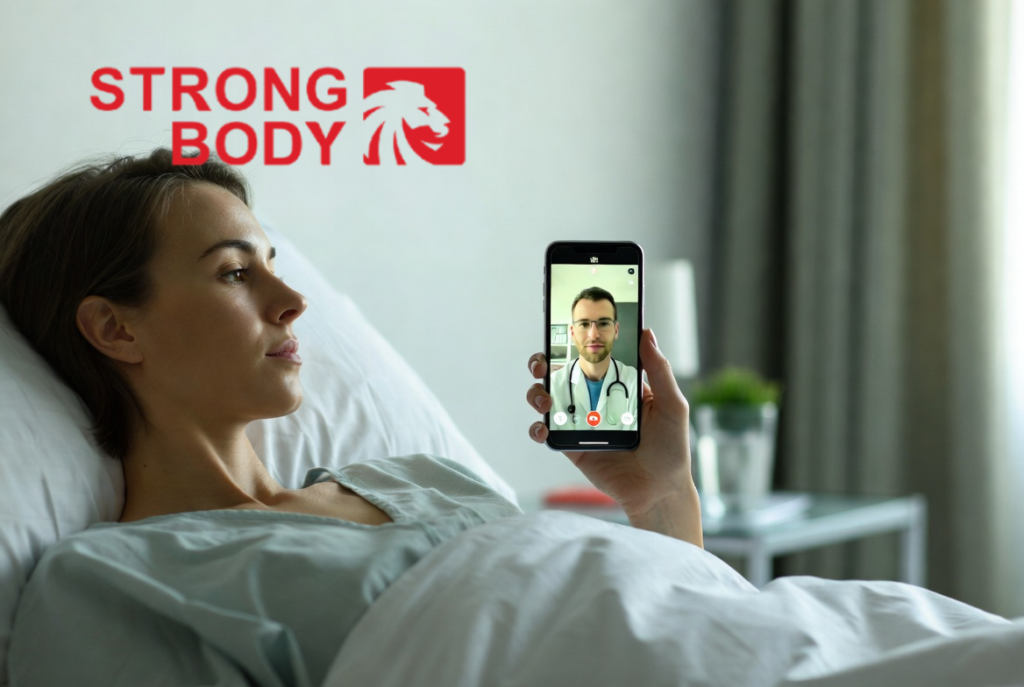
The turning point arrived unexpectedly on a typical drizzly London afternoon, as Olivia scrolled Facebook and spotted Sarah’s post about StrongBody AI—a global platform linking health experts with users, described by Sarah as “a genuine bridge for those feeling lost.” Intrigued, she visited the website and signed up, drawn to its straightforward, user-friendly interface, though occasional slow loading due to Islington’s spotty network was a minor technical hiccup the platform was addressing. Through its smart matching system, Olivia connected with Dr. Sophia Ramirez, a Spanish psychologist specializing in women’s health from Madrid, offering online consultations to international clients with expertise in post-divorce anxiety disorders. Sophia wasn’t a robotic chatbot but a real expert, her gentle voice in voice messages attentively covering Olivia’s physical, mental, lifestyle, and relational aspects. “I get that loss can derail us, but we can reclaim our path starting small, tailored to your biological cycles,” Sophia said in their first session, her warm tone through headphones making Olivia feel heard for the first time in years. Olivia sensed the distinction immediately: StrongBody AI wasn’t merely digital; it was a true human connector, featuring personalized tracking journals and plans adjusted for women’s menstrual cycles—elements absent in other apps, despite minor glitches like slightly off auto-translation for her regional British accent. Trust built through specifics: sipping herbal tea as advised, jotting in a fresh-scented notebook for daily progress, and opening her window to let in rare sunlight, while Eleanor phoned encouragingly: “Give it a shot, sis; I’ve heard StrongBody AI helps many in the UK.” This link came at a critical juncture, amid UK trends where, per a 2025 Finn Partners report, telemedicine and personalized medicine were rising, with apps like StrongBody AI aiding mental health access.
Olivia’s arduous journey commenced with incremental shifts guided by Sophia via StrongBody AI, but she soon realized her personal effort was pivotal, with the platform serving as a catalyst. She began hydrating with 2 liters daily, deep breathing for 10 minutes at dawn amid London’s humid air, bedding down by 10 PM under her familiar blanket, and breakfasting nutritiously with oat porridge mixed with market fruits. Setbacks occurred: nights awake from divorce flashbacks, fatigue sapping motivation, tempting abandonment. Then, Sophia responded via late-night messages on the platform, albeit delayed occasionally by time zone differences between the UK and Spain—a technical limitation StrongBody AI was improving with more local experts. Or through virtual support groups with fellow UK women, where Olivia confided, “I’m so exhausted; it feels like everything’s crumbling.” Another member replied, “I know, but persist; the customized plans helped me through.” “Remember, Olivia, our hormones fluctuate cyclically—today’s fatigue differs tomorrow; let’s tweak the plan,” Sophia encouraged in a video call, her empathy palpable. The path wasn’t linear: days of tears from vulnerability, like at a charity run in Regent’s Park she self-enrolled in during month two—a 500-participant event for mental health funds, with crowd cheers and wet grass scent post-rain, but she halted midway, gasping. This event marked a personal pivot: her initiative in early rising, gearing up, and pushing through muscle aches, paired with Sophia’s pre-event nutrition tips (protein shakes for energy), drove progress. Lavender oil’s aroma, suggested by Sophia, diffused calm tactility in her room, as Sarah joined and cheered: “You’re doing great, Olivia! This is your first step.” Such instances underscored StrongBody AI as supportive motivator, yet Olivia’s resolve shone, in a UK where the House of Lords 2025 report noted middle-aged women facing economic and caregiving hurdles, with elevated unemployment from age bias.
An unforeseen twist hit in month three: a sudden chest pain crisis from built-up stress, felling her in the kitchen amid shattering crockery and scorched food smells from the oven. Panicked, Olivia accessed StrongBody AI’s app for an emergency request, despite brief connectivity lags from weak Wi-Fi—a noted platform flaw advising pre-checks. It swiftly linked her to local London cardiologist Dr. Raj Patel, matched by her location and medical history. “Stay calm, Olivia; lie still and breathe deeply—I’ll guide you phonically while awaiting the ambulance, and monitor your pulse as instructed,” Raj assured via speaker. Timely aid got her to St Thomas’ Hospital, averting severe complications like myocardial infarction, with tests revealing high cholesterol from prior poor diet. This occurred against NHS overload, with over 7 million on waiting lists per 2025 data, emphasizing StrongBody AI’s emergency bridging role without direct intervention. Post-incident, Olivia redoubled efforts via local healthy cooking classes, befriending others and mastering organic veggie salads, merged with Raj’s daily blood pressure tracking advice—her journaling of intake proving transformative.
By month six, marked improvements emerged: radiant skin from balanced C-vitamin nutrition; sound sleep yielding peaceful dreams; stable mood with returning smiles in class; natural 8kg loss; life equilibrium regained. She resumed work energized, earning a department head promotion for enhanced performance, and reconnected familially at a cozy Covent Garden tea room, scones’ aroma filling the air as Eleanor beamed: “You look healthier than ever, sis; I’m proud.” “Sophia, your guidance helped me rediscover myself—not just healthy, but proactively happy,” Olivia messaged finally on StrongBody AI. The universal message resonated: “In isolation, deep connections and proactive care can save lives.” Yet Olivia’s story extended: she volunteered at London divorce support funds, sharing experiences to aid others; rekindled old friendships with Brighton weekend trips, savoring salty sea breezes and wave crashes; tentatively dated a kind colleague, navigating nerves. New challenges arose, like heightened job stress from 2025 UK education reforms, but she wielded self-tools: her notebook brimming with goals from dance lessons to European travels. A fresh plot unfolded in month seven: joining a women’s health seminar in Camden, inspired by StrongBody AI’s recommendations, where she met Lisa, a fellow divorcee, forging a bond over shared stories—Lisa saying, “Your resilience inspires me; let’s start a walking group.” This led to weekly strolls in Hampstead Heath, discussing menopause symptoms like hot flushes and fatigue, per NHS guidelines for ages 45-55, and exploring osteoporosis prevention through calcium-rich diets. Financial worries peaked when bills surged, but StrongBody AI’s affordable expert links eased access without NHS waits—over 22% exceeding six weeks for diagnostics, per 2025 reports. Another twist: a family visit to Manchester, where Margaret, noticing Olivia’s glow, shared her own midlife struggles: “I wish I’d had something like your app back then.” This prompted Olivia to introduce StrongBody AI to her mother, fostering intergenerational healing. Amid UK trends of AI-personalized health coaching per 2025 ProductMagic insights, Olivia integrated app-monitored fitness, tracking steps during museum visits—her history passion reignited. Yet, dips occurred: a rainy day triggering old anxieties, but she journaled through, calling Eleanor: “Sis, I’m slipping, but I’ll push on.” The narrative opened wider: Olivia eyed a sabbatical for writing a book on women’s resilience, drawing from her path, and advocated locally for better mental health funding, attending council meetings amid 2025’s rising common conditions per Rethink Mental Illness. Sitting by her window, warm tea in hand, Olivia felt inner awakening: “Happiness isn’t a destination but a self-built journey, with ceaseless connections and efforts.” Her life now expansive, hopeful, though tough days lingered, proving substantial progress yet an ongoing voyage, independent of any single platform.
Overview of StrongBody AI
StrongBody AI is a platform connecting services and products in the fields of health, proactive health care, and mental health, operating at the official and sole address: https://strongbody.ai. The platform connects real doctors, real pharmacists, and real proactive health care experts (sellers) with users (buyers) worldwide, allowing sellers to provide remote/on-site consultations, online training, sell related products, post blogs to build credibility, and proactively contact potential customers via Active Message. Buyers can send requests, place orders, receive offers, and build personal care teams. The platform automatically matches based on expertise, supports payments via Stripe/Paypal (over 200 countries). With tens of millions of users from the US, UK, EU, Canada, and others, the platform generates thousands of daily requests, helping sellers reach high-income customers and buyers easily find suitable real experts.
Operating Model and Capabilities
Not a scheduling platform
StrongBody AI is where sellers receive requests from buyers, proactively send offers, conduct direct transactions via chat, offer acceptance, and payment. This pioneering feature provides initiative and maximum convenience for both sides, suitable for real-world health care transactions – something no other platform offers.
Not a medical tool / AI
StrongBody AI is a human connection platform, enabling users to connect with real, verified healthcare professionals who hold valid qualifications and proven professional experience from countries around the world.
All consultations and information exchanges take place directly between users and real human experts, via B-Messenger chat or third-party communication tools such as Telegram, Zoom, or phone calls.
StrongBody AI only facilitates connections, payment processing, and comparison tools; it does not interfere in consultation content, professional judgment, medical decisions, or service delivery. All healthcare-related discussions and decisions are made exclusively between users and real licensed professionals.
User Base
StrongBody AI serves tens of millions of members from the US, UK, EU, Canada, Australia, Vietnam, Brazil, India, and many other countries (including extended networks such as Ghana and Kenya). Tens of thousands of new users register daily in buyer and seller roles, forming a global network of real service providers and real users.
Secure Payments
The platform integrates Stripe and PayPal, supporting more than 50 currencies. StrongBody AI does not store card information; all payment data is securely handled by Stripe or PayPal with OTP verification. Sellers can withdraw funds (except currency conversion fees) within 30 minutes to their real bank accounts. Platform fees are 20% for sellers and 10% for buyers (clearly displayed in service pricing).
Limitations of Liability
StrongBody AI acts solely as an intermediary connection platform and does not participate in or take responsibility for consultation content, service or product quality, medical decisions, or agreements made between buyers and sellers.
All consultations, guidance, and healthcare-related decisions are carried out exclusively between buyers and real human professionals. StrongBody AI is not a medical provider and does not guarantee treatment outcomes.
Benefits
For sellers:
Access high-income global customers (US, EU, etc.), increase income without marketing or technical expertise, build a personal brand, monetize spare time, and contribute professional value to global community health as real experts serving real users.
For buyers:
Access a wide selection of reputable real professionals at reasonable costs, avoid long waiting times, easily find suitable experts, benefit from secure payments, and overcome language barriers.
AI Disclaimer
The term “AI” in StrongBody AI refers to the use of artificial intelligence technologies for platform optimization purposes only, including user matching, service recommendations, content support, language translation, and workflow automation.
StrongBody AI does not use artificial intelligence to provide medical diagnosis, medical advice, treatment decisions, or clinical judgment.
Artificial intelligence on the platform does not replace licensed healthcare professionals and does not participate in medical decision-making.
All healthcare-related consultations and decisions are made solely by real human professionals and users.
StrongBody AI Serves as a Vital Lifebuoy for Women Facing Crisis in the UK
In the heart of London, Olivia Harrington’s story illustrates the profound intersection of divorce, financial strain, and mental health decline. As statistics show 24% of English women struggle weekly with mental health, Olivia found herself isolated and physically deteriorating. The narrative highlights how traditional systems often fall short due to long waiting lists and generic advice, leaving middle-aged women feeling invisible.
The StrongBody AI Platform Facilitates Personalised Connections with Real Global Experts
The turning point arrived when Olivia joined StrongBody AI, a platform that prioritises human-to-human connection over automated bots. By matching with Dr Sophia Ramirez, Olivia received tailored guidance that respected her biological cycles and cultural context. Unlike standard medical tools, StrongBody AI acted as a secure bridge, allowing for direct communication and professional intervention that sparked a holistic recovery.
Resilience and Proactive Care are Optimised Through the StrongBody AI Ecosystem
Through consistent effort and the support of the StrongBody AI network, including emergency cardiology intervention, Olivia transitioned from despair to a “proactive happiness.” She successfully managed weight loss, regained her career momentum, and fostered intergenerational healing. Ultimately, the platform empowered her to build a self-sustaining journey of health, proving that digital connectivity can lead to profound real-world transformation.

Lion Rose
Content Team
Lion Rose is a key contributor to StrongBody AI's mission of making quality healthcare accessible globally.